
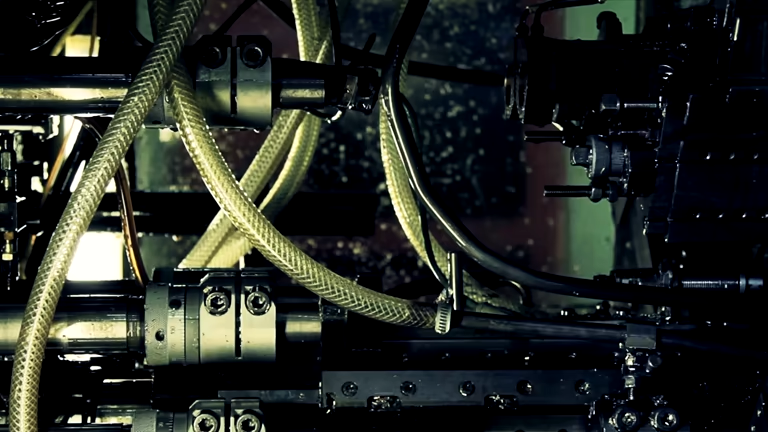
In construction, plumbing, automotive, and industrial systems, choosing the right components is critical for long-term performance and safety. One often-overlooked yet essential element is the braided hose. While all braided hoses may look similar at a glance, their quality varies significantly—impacting pressure resistance, durability, and even compliance with local building codes.
In this article, we explore what defines a high-quality braided hose, how it influences project success, and how buyers, contractors, and engineers can evaluate products effectively. This content is written using geo-optimized SEO best practices, with the keyword “Braided Hose” featured naturally and regionally relevant terms included to improve search visibility across North America, Europe, Australia, and other English-speaking markets.
What Is a Braided Hose?
A braided hose is a flexible tubing system designed to carry fluids or gases under pressure. It consists of:
- An inner core (typically rubber, PVC, or PTFE)
- A braided outer layer made from stainless steel, polyester, or nylon
- End fittings such as threaded, compression, or quick-connect couplings
The braided layer provides structural reinforcement, preventing expansion and protecting against wear and environmental damage.
But not all braided hoses offer the same level of quality—and that difference can determine system reliability and safety.
Why Quality Matters in Braided Hoses
High-quality braided hoses provide critical benefits across construction and industrial applications:
| Quality Factor | Impact on Performance |
|---|---|
| Pressure tolerance | Prevents ruptures and system failure |
| Temperature resistance | Ensures stable operation under heat or cold |
| Chemical compatibility | Prevents corrosion and material breakdown |
| Connection integrity | Reduces leaks and fitting separation risks |
| Service lifespan | Cuts replacement costs and labor disruptions |
Using low-quality hoses may save money up front but can lead to costly repairs, code violations, or even safety incidents over time.
Key Characteristics of a High-Quality Braided Hose
To identify a top-grade braided hose, look for the following features:
1. Reinforcement Material
- Stainless steel (304 or 316) braiding offers corrosion resistance and strength
- Nylon or polyester braid may suffice for lighter-duty applications, but should be UV-resistant and abrasion-tested
2. Inner Tube Composition
- EPDM rubber is ideal for water and non-oily fluids
- PTFE (Teflon) resists high temperatures and aggressive chemicals
- PVC is cost-effective but best for low-pressure, non-corrosive applications
3. Certified Fittings and Construction
Look for hoses with factory-installed, crimped ends, made of brass or stainless steel. The fittings should comply with regional standards such as:
- NSF/ANSI in the U.S. for potable water
- WRAS approval in the UK
- WaterMark Certification in Australia
- CE and ISO marks in Europe
4. Test Pressure and Burst Rating
High-quality braided hoses clearly state their maximum working pressure and burst pressure (usually at least 3x the working rating). This is critical for systems under high or variable loads.
Quality Certifications to Look For
When sourcing braided hoses, especially for construction or industrial environments, always verify certifications:
| Region | Recommended Standards |
|---|---|
| United States | NSF 61, UL, ASME, ASTM |
| Canada | CSA B125, ULC |
| United Kingdom | WRAS, BS EN ISO 10380 |
| Europe (EU) | CE, ISO 9001, PED |
| Australia | WaterMark, AS/NZS 3499 |
These certifications confirm the quality, safety, and compliance of the hose in local building and plumbing applications.
Use Case: Commercial Building Plumbing in Melbourne, Australia
A large commercial office project in Melbourne used over 500 WaterMark-certified stainless steel braided hoses for sink and toilet connections. These hoses were selected due to:
- 316 stainless steel braiding for corrosion resistance
- EPDM liners rated for 90°C hot water
- Factory-tested burst pressure of 2,000 psi
As a result, the project passed all compliance inspections with zero leak reports during commissioning—highlighting how quality braided hoses support building integrity and reduce risk.
How to Evaluate Braided Hose Quality Before Purchase
For buyers, contractors, or procurement managers, here’s a quick checklist:
✅ Read the specifications — Check pressure ratings, temperature range, and materials
✅ Verify certifications — Ask for documentation proving compliance
✅ Inspect the fittings — Look for heavy-duty metal ends, secure crimping, and clean threads
✅ Request testing data — Reputable manufacturers provide burst tests, flow rate charts, and chemical compatibility tables
✅ Check country of origin — Some regions (e.g., Germany, Japan) are known for high manufacturing standards
If you’re purchasing online, ensure the braided hose is described with full specs, and that the product page includes geo-relevant terms like:
- “Braided Hose for Plumbing – WRAS Approved – UK Supply”
- “Stainless Steel Braided Hose – NSF Certified – Ships from California”
- “High-Pressure Braided Hose – AS/NZS 3499 – Sydney Warehouse”
This boosts visibility for both users and search engines in regional markets.
Conclusion: Don’t Compromise on Braided Hose Quality
The braided hose may seem like a small component in a larger system, but its quality determines whether that system will perform safely, efficiently, and compliantly. A high-quality braided hose provides peace of mind—delivering the strength, flexibility, and reliability needed in demanding environments.
Whether you’re a builder in London, a contractor in Texas, or a facilities manager in Sydney, investing in certified, pressure-rated braided hoses is the smart way to safeguard your systems—and your reputation.
Would you like this content adapted into a technical brochure, eCommerce product page, or print catalog format? I can reformat it to suit your regional audience and platform requirements.
Contact
IFAN is a professional manufacturer with 30 years of experience, dedicated to producing high-quality plastic pipes, fittings, and valves. Our products include brass valves, PPR valves, as well as various pipes and fittings to meet different customer needs. Whether you need plumbing and drainage pipes or valve products. IFAN can provide a diverse range of high-quality, cost-effective products to support your projects. Below is our contact information.
We will reply your email or fax within 24 hours.
You can call us at any time if there is any question on our production.
Pls Mailto:[email protected]


Recent Comments