
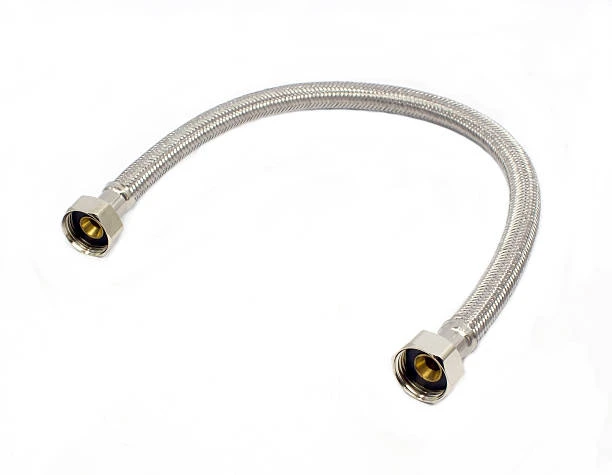
In the world of plumbing, construction, HVAC, and industrial fluid handling, one component plays a consistently vital role: the braided hose. Known for its ability to transport fluids and gases under pressure, the braided hose combines structural strength with flexibility and durability—making it a go-to solution across residential, commercial, and industrial applications.
In this article, we explore the key features of braided hoses, why they matter, and how to evaluate hose performance based on specifications. The content is fully SEO-optimized for the keyword “Braided Hose” and follows best practices for geo-targeted visibility across English-speaking markets like the United States, United Kingdom, Canada, and Australia.
What Is a Braided Hose?
A braided hose is a flexible tube designed to carry liquids or gases. It consists of:
- An inner hose or core (commonly made of rubber, PVC, or PTFE)
- An outer braided layer made of stainless steel, polyester, or nylon
- Metal or plastic end fittings (threaded, compression, quick-connect, etc.)
The braid reinforces the hose, improving pressure capacity and protection against wear, abrasion, and mechanical stress. Its key features directly impact how well it performs under different environmental and system conditions.
Top 10 Features of a Braided Hose
1. Pressure Resistance
One of the most important features of a braided hose is its ability to withstand high internal pressure. The braided layer prevents the hose from expanding or bursting under pressure. Hoses may be rated from 150 psi up to 3,000+ psi, depending on the material and construction.
✅ Example: A stainless steel braided hose used in New York’s commercial plumbing systems may be rated at 1,200 psi for secure operation in high-rise water lines.
2. Flexibility and Bend Radius
Unlike rigid piping, a braided hose offers excellent flexibility, which allows it to be routed through tight spaces, around equipment, and between moving parts. The minimum bend radius varies by hose type but is a critical feature in systems where space is limited.
✅ In HVAC installations in London, braided hoses are commonly used to connect units on rooftops where movement and flexibility are essential.
3. Vibration and Movement Absorption
A high-quality braided hose absorbs vibration and mechanical movement, making it ideal for connecting pumps, compressors, or vibrating machinery. This prevents stress at connection points and extends the lifespan of both the hose and adjacent components.
4. Temperature Tolerance
Braided hoses are built to withstand a wide temperature range, making them suitable for hot water, steam, or cryogenic applications. PTFE core hoses, for instance, can typically handle from -70°C to +260°C.
✅ In Australian mining operations, braided hoses with high thermal resistance are used in cooling and hydraulic systems exposed to extreme heat.
5. Corrosion and Chemical Resistance
Stainless steel braided hoses provide excellent corrosion resistance, especially in damp or chemically aggressive environments. For chemically reactive fluids, PTFE-lined braided hoses offer additional protection and durability.
6. Burst Pressure Rating
The burst pressure rating indicates how much pressure a hose can handle before failing. It is typically 3–4 times higher than the working pressure. This safety factor is a key feature when selecting hoses for critical applications, like gas delivery or firefighting systems.
7. UV and Abrasion Resistance
Braided hoses designed for outdoor or industrial use often include UV-stabilized jackets or outer braiding that resists abrasion. Nylon and polyester braids, while lighter than stainless steel, are often treated to handle rough environments.
✅ Construction projects in regions like Texas and Queensland often rely on braided hoses with abrasion-resistant coatings for outdoor installations.
8. Ease of Installation
A well-designed braided hose includes user-friendly end fittings such as:
- BSP or NPT threads
- Compression fittings
- Quick-connect couplings
- Flanged connections
These features reduce installation time and allow for tool-less or low-tool connections, saving labor costs on job sites.
9. Noise Dampening
In dynamic systems such as air compressors or plumbing setups with high flow rates, braided hoses help dampen noise and fluid hammer. This improves system comfort and operational safety.
10. Regulatory Compliance
A key feature for many regions is certification or compliance with local standards, such as:
| Region | Common Certifications |
|---|---|
| United States | NSF 61, UL, ASME |
| United Kingdom | WRAS, BS EN ISO 10380 |
| Australia | WaterMark, AS/NZS 3499 |
| Canada | CSA B125, ULC |
These features ensure the braided hose meets legal and performance requirements for drinking water, gas systems, and more.
Use Case: Braided Hose in Commercial Fire Sprinkler Systems (Toronto, Canada)
In a recent fire protection upgrade in Toronto, over 800 stainless steel braided flexible sprinkler hoses were installed to connect sprinkler heads to main lines. Key features that made this possible:
- 3,000 psi burst pressure
- Flexible routing to avoid ceiling obstructions
- CSA/UL certification
- Zero leakage during 24-hour system testing
This project highlights how the right braided hose features enable code-compliant, efficient, and safe installations.
How to Compare Braided Hoses by Features
When selecting a braided hose, always evaluate:
| Feature | What to Check |
|---|---|
| Working Pressure | Should exceed system requirements |
| Temperature Range | Must match hot or cold fluid conditions |
| Hose Material | PTFE, EPDM, PVC—based on fluid compatibility |
| Outer Braiding | Stainless steel for durability, nylon for light weight |
| Fitting Type | Ensure compatibility with existing connections |
| Certifications | Check if local regulations require approval |
Always request spec sheets and performance data from suppliers to confirm the product’s suitability.
Conclusion: The Features That Define a Great Braided Hose
A braided hose is more than just a flexible tube—it is a high-performance solution engineered to meet the demands of modern fluid systems. By understanding and comparing hose features such as pressure tolerance, flexibility, thermal range, and certifications, professionals can make informed decisions that lead to safe, efficient, and long-lasting installations.
Whether you’re sourcing braided hoses for residential plumbing, commercial HVAC systems, or industrial chemical processing, choosing a product with the right features will ensure success from the start.
Contact
IFAN is a professional manufacturer with 30 years of experience, dedicated to producing high-quality plastic pipes, fittings, and valves. Our products include brass valves, PPR valves, as well as various pipes and fittings to meet different customer needs. Whether you need plumbing and drainage pipes or valve products. IFAN can provide a diverse range of high-quality, cost-effective products to support your projects. Below is our contact information.
We will reply your email or fax within 24 hours.
You can call us at any time if there is any question on our production.
Pls Mailto:[email protected]




Recent Comments