
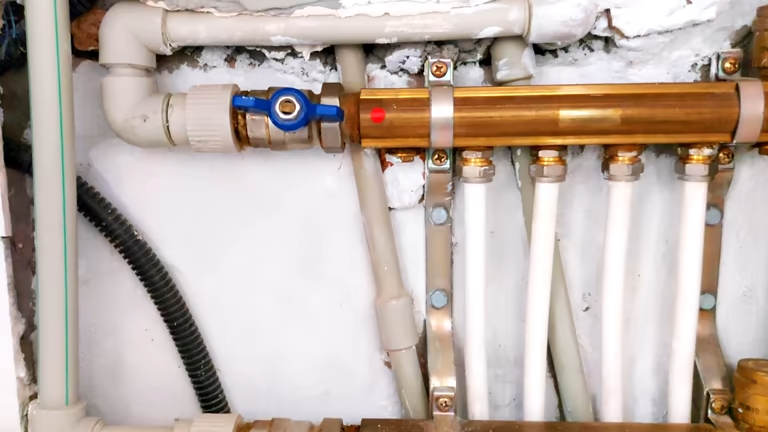
1. Basic Definition and Summary Overview
A 4 way brass manifold distributes flow from one inlet into four independent circuits. Workers inspect connected pipelines to ensure consistent flow balance. Brass construction resists temperature fluctuations and pressure stress. Pipeline inspection supports performance stability over many environments. Industrial systems require consistent monitoring to avoid leaks and pressure loss. Workers measure flow at each branch to verify balance. Structured inspections avoid unnecessary failures. Teams record pressure readings and flow values regularly. Pipeline systems often develop blockages or scaling. Brass tolerates aggressive water quality and thermal shock. Residential, commercial, and agricultural heating networks use this component widely. Good inspection practice extends component lifespan significantly. Workers evaluate vibration, support strength, and sealing performance. The 4 way brass manifold remains central in pipeline inspection work. This article explains common questions, industry applications, installation notes, comparisons, and inspection logic.
2. Frequently Asked Questions (FAQ)
Q1: Why do workers inspect pipeline pressure?
Workers inspect pipeline pressure to verify balanced distribution. Sudden drops indicate leaks or blockages. Inspection prevents unnecessary energy consumption.
Q2: How do workers detect internal sediment?
Workers flush circuits and measure flow resistance. Rising resistance indicates sediment growth. They disassemble branch fittings for cleaning.
Q3: Can workers test flow with the manifold installed?
Yes. The 4 way brass manifold isolates each circuit. Workers close valves independently. Testing becomes easier and safer.
Q4: What tools improve inspection accuracy?
Workers use pressure gauges, thermometers, and flow meters. Data logs improve long-term analysis. Digital sensors support accurate monitoring.
Q5: When should workers repeat inspections?
Workers inspect pipelines twice each year. Complex systems require quarterly checks. Harsh water conditions justify monthly inspections.
3. Application Industries
Many sectors demand pipeline inspection alongside the 4 way brass manifold. Residential heating systems distribute water through multiple loops. Schools warm classrooms evenly across large buildings. Workers monitor energy efficiency. Hospitals maintain controlled climates across wards and labs. They prioritize safety and reliability. Greenhouses heat soil beds for crop growth. Faulty pipelines reduce plant productivity. Hotels manage hallway heat and bathroom comfort. Spas require warm floor circulation. Manufacturing plants cool production lines to protect equipment. Workers inspect cooling pipes for scale and flow issues. Poultry farms heat large enclosures evenly. Workers verify temperature distribution frequently. Stadium concourses require large heating loads. Workers adjust valves and monitor sensor outputs. District heating networks supply entire neighborhoods. Large networks require strict inspection guidelines. The 4 way brass manifold enables organized distribution control. Field technicians rely on it for circuit isolation during routine diagnostics.
4. Installation and Inspection Considerations
Workers inspect threaded joints before installation. Damaged threads leak under pressure. They tighten valves using balanced torque. Over-tightening damages brass seats. Workers flush pipelines before final connection. Sediment hides inside older pipes. Clean channels ensure stable flow. Workers install air vents near high points. Air pockets reduce heating and circulation. They support pipe weight with brackets. Unstable weight stresses manifold joints. Workers install insulation to minimize heat loss. They verify valve orientation carefully. Wrong alignment disrupts flow balance. Before startup, workers pressurize circuits gradually. Abrupt surges damage seals. Recorded data improves later inspections. Workers adjust valves until flow meters show stable value. The 4 way brass manifold responds quickly to fine adjustments. Maintenance scheduling prevents severe issues. Workers communicate inspection data through standard reports.
5. Procurement Promotion Activity
Our store now hosts a bulk purchasing event. Contractors receive reduced pricing on large quantities. Heating valves, pipes, sensors, and the 4 way brass manifold qualify for tiered discounts. Builders request consultation from technical staff. Engineers receive layout suggestions for complex networks. Visit our facility at 1653 Brooks Avenue, Fayetteville, Arkansas. Staff members answer detailed inspection questions. Companies qualify for priority shipping during cold seasons. Stable inventory supports large projects.
6. Comparison With Other Key Components
The 4 way brass manifold compares favorably to plastic manifolds. Brass withstands high temperature and pressure conditions. Plastic softens under stress and temperature spikes. Stainless steel manifolds resist corrosion strongly. However, stainless costs more and weighs more. Copper manifolds perform well but require skilled soldering. Brass threading reduces required skill levels. Tee fittings divide flow without isolation ability. Workers cannot isolate circuits easily. The manifold isolates branches through simple valves. Welded manifolds require specialized repair equipment. Brass threaded joints simplify part replacement. Smart polymer manifolds integrate electronics. However, electronics introduce failure points. Mechanical brass remains reliable under field conditions. The 4 way brass manifold also supports flow meters. These meters aid inspection teams during audits. Brass delivers strong cost-performance balance.
7. Worker Inspection Behavior and Field Scenarios
Workers detect leaks using soap water and pressure variation. Bubbling indicates a leak point. Workers tighten or reseal connections. They monitor temperature differences across circuits. Cold loops indicate internal blockage. Workers check pipe support stability. Vibration eventually loosens threaded joints. Workers secure brackets and adjust pipe angles. On underfloor heating networks, workers review flow meter readings. Low readings indicate partial blockage. Workers record values over several days. Data shows performance trends. They inspect valve handles for smooth operation. Rough movement indicates scale buildup. In industrial environments, workers check for chemical exposure near the 4 way brass manifold. Chemicals degrade sealing rings. Workers adjust valve positions gradually. Sudden changes create hydraulic shock. Training improves worker judgment. Pipeline inspections require clear labeling. Labels prevent confusion during emergencies. Workers terminate inspection sessions with documented summaries.
8. Conclusion
Pipeline inspection plays a key role in system reliability. Workers rely on clear measurements and consistent documentation. The 4 way brass manifold helps isolate circuits for targeted diagnostics. Industries demand stable temperature control. Skilled workers identify leaks, blockages, and imbalance early. Brass construction withstands temperature fluctuations and flow turbulence. Compared with alternative components, brass offers balanced durability and cost. Workers avoid overtightening, vibration, and chemical exposure. They schedule periodic inspection cycles throughout the year. Field teams analyze data and adjust circuits accordingly. Procurement savings support large project budgets. Good inspection practices lengthen component lifespan. Heating, cooling, and agricultural systems benefit from careful oversight. Workers maintain comfort and safety for end users. As systems evolve, inspection tools continue improving. The 4 way brass manifold remains central to pipeline inspection strategies.
Contact
IFAN is a professional manufacturer with 30 years of experience, dedicated to producing high-quality plastic pipes, fittings, and valves. Our products include brass valves, PPR valves, as well as various pipes and fittings to meet different customer needs. Whether you need plumbing and drainage pipes or valve products. IFAN can provide a diverse range of high-quality, cost-effective products to support your projects. Below is our contact information.
We will reply your email or fax within 24 hours.
You can call us at any time if there is any question on our production.
Pls Mailto:[email protected]











Recent Comments