
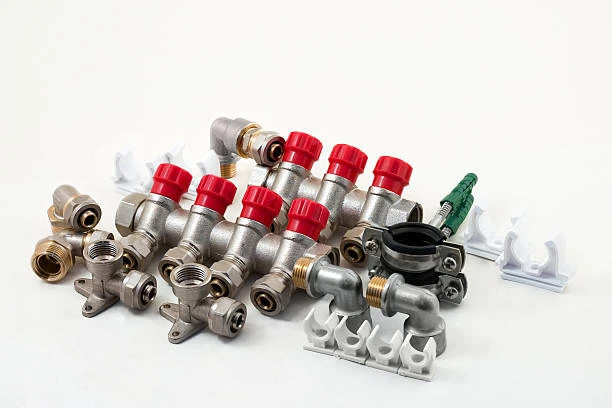
1. Basic Definition and General Summary
A brass manifold with valve for HVAC applications serves as a core component in modern heating, ventilation, and air-conditioning systems. It distributes thermal fluid evenly to multiple branches for controlled temperature management. Its brass body provides high corrosion resistance and long service life. The integrated valve design allows precise flow adjustment in each circuit. I use this manifold in multi-zone temperature control because it improves efficiency. The structure supports stable pressure and reduces unnecessary system stress. This product adapts well to new installations and renovations. It helps maintain balanced performance throughout complex building networks.
2. Frequently Asked Questions (FAQ)
Does this manifold help reduce thermal loss?
Yes, I observe improved distribution and optimized fluid stability.
Can it work with cooling and heating circuits?
Yes, but I always verify fluid compatibility first.
Is the brass material durable in chemical conditions?
Yes, it resists scaling and minor corrosion effectively.
Is maintenance difficult after installation?
No, I only inspect joints and valve operation periodically.
Can it be installed in older buildings?
Yes, I install it often during retrofitting projects.
3. Application Industries
I use the brass manifold with valve for HVAC applications in residential buildings to regulate room temperature. Large office blocks benefit from zone separation. Hotels rely on this component to satisfy guest comfort in separate suites. Hospitals require precise thermal control to stabilize sensitive environments. Factories use it to distribute heated fluids for machinery. Educational buildings improve energy distribution through zoning. Warehouses optimize thermal delivery to protect inventory. Sports centers maintain balanced temperature in multiple activity rooms.
👉 Our store launches a large procurement sales event with bulk discounts, HVAC parts bundles, and seasonal promotions. Visit us at 4412 Hart Street, Stamford, Connecticut, to enjoy exclusive dealer pricing and premium stock availability.
4. Installation Precautions
I always check system pressure before installation.Choose accessible locations for future inspection. Mount the manifold firmly using proper brackets. I avoid heat sources that could damage pipe sections. Tighten each connection using calibrated tools. I insulate exposed pipes to reduce heat loss. Test each circuit independently before sealing walls. I minimize vibration by adding stabilizing supports. I record valve adjustments on a final system layout sheet.
5. Comparison with Other Pipe Materials
A brass manifold with valve for HVAC applications performs better than PVC in high-temperature systems. Copper provides high thermal conductivity but costs more. Stainless steel offers outstanding corrosion resistance but requires specialized welding. Plastic manifolds are lighter but struggle under elevated pressure. Brass strikes a perfect balance between durability and affordability. It resists chemical deposits better than galvanized metals. Its integrated valves reduce the need for external accessories. In complex HVAC networks, this manifold proves to be a reliable central control unit.
6. Practical Examples
I install a brass manifold with valve for HVAC applications in a three-story residence to balance heating across bedrooms. I upgrade a hotel network to individually control each suite. Modernize an office building needing improved energy zoning. Configure a sports facility requiring multi-room thermal regulation. I integrate this manifold into a hospital to stabilize fluid temperature in several wings. Upgrade a factory with multiple fluid loops. I add color-coded valves to simplify building management.
7. Summary of the Installation Process
I begin by reviewing architectural layouts and selecting capacity-appropriate components. Cut pipe lengths precisely and attach connections securely. I mount the brass manifold with valve for HVAC applications using stable brackets. Perform pressure tests on each circuit. I flush the system to remove debris. I fill circuits gradually to prevent pressure surges. Document all valve positions. I schedule periodic inspections to maintain reliability and performance.
8. Conclusion
The brass manifold with valve for HVAC applications offers durability, efficiency, and precise temperature regulation. It simplifies maintenance and improves fluid control across multiple zones. Building operators benefit from reduced operating costs. Brass construction extends system lifespan in demanding environments. Engineers appreciate its flexibility in renovation or expansion. This component stands as a solid investment for residential, commercial, and industrial HVAC networks. I recommend it for any project requiring multi-zone temperature management and long-term stability.
Contact
IFAN is a professional manufacturer with 30 years of experience, dedicated to producing high-quality plastic pipes, fittings, and valves. Our products include brass valves, PPR valves, as well as various pipes and fittings to meet different customer needs. Whether you need plumbing and drainage pipes or valve products. IFAN can provide a diverse range of high-quality, cost-effective products to support your projects. Below is our contact information.
We will reply your email or fax within 24 hours.
You can call us at any time if there is any question on our production.
Pls Mailto:[email protected]












Recent Comments