
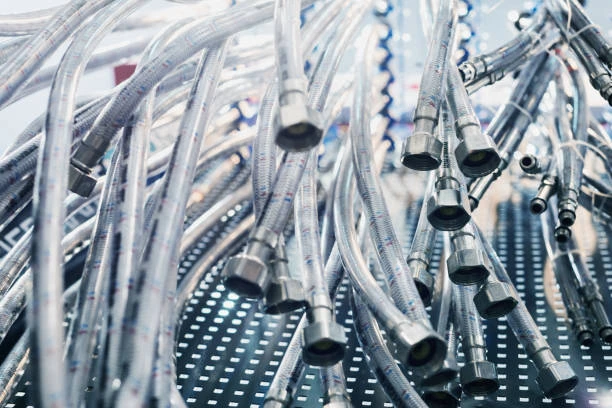
In today’s agriculture, efficient water delivery, chemical spraying, and machinery operation demand durable and flexible hose systems. Among various options, braided rubber hoses have become an essential component for modern farms. These hoses combine the flexibility of rubber with the strength of braiding, making them ideal for various agricultural applications—from irrigation to pesticide distribution. This article explores the role of braided rubber hoses in agriculture, answering key questions, examining their features, and highlighting the areas where they shine.
FAQ: Common Questions About Braided Rubber Hoses in Agriculture
1. Why are braided rubber hoses commonly used in farms?
Because they offer strong pressure resistance, flexibility in rough environments, and long service life, making them suitable for irrigation, spraying, and fluid transport.
2. Can braided rubber hoses be used for fertilizers and chemicals?
Yes, most braided rubber hoses are chemically resistant and can safely handle various agricultural chemicals when selected correctly.
3. Are these hoses compatible with farm equipment like pumps and sprayers?
Absolutely. Braided rubber hoses are designed to be compatible with standard agricultural connectors and are widely used with pumps, sprayers, and irrigation tools.
4. How long does a braided rubber hose typically last in farm conditions?
With proper use, a high-quality braided rubber hose can last several years, even under outdoor exposure and high-pressure usage.
5. What sizes are available for agricultural use?
They come in various diameters and lengths, ranging from 1/4 inch for precision spraying to 2 inches or more for large-volume irrigation tasks.
What Is a Braided Rubber Hose? Key Definition and Characteristics
A braided rubber hose is a flexible tube made from natural or synthetic rubber and reinforced with a braided layer—typically made from polyester, nylon, or stainless steel wire. This braid increases pressure resistance and structural integrity while maintaining flexibility.
Several technical characteristics define these hoses:
- Flexibility: The rubber body allows the hose to bend around corners and maneuver through fields easily.
- Pressure Strength: The braided reinforcement layer helps the hose withstand high water or chemical pressures common in agricultural systems.
- Abrasion Resistance: The outer rubber coating protects against wear from rough ground and weather conditions.
- Chemical Compatibility: Many rubber compounds resist corrosion or degradation when exposed to fertilizers, pesticides, or cleaning agents.
- UV and Temperature Resistance: Designed to operate in outdoor conditions, these hoses resist sunlight damage and maintain performance in varying temperatures.
Agricultural Applications: Where Braided Rubber Hoses Make a Difference
Braided rubber hoses are used across many aspects of agriculture due to their strength and adaptability. Below are some common use cases and industries within the agricultural sector where these hoses prove invaluable.
1. Irrigation Systems
Perhaps the most common application is irrigation. Whether in drip irrigation setups or sprinkler systems, braided rubber hoses carry water from pumps to crops efficiently. Their flexibility allows easy routing through fields, and their pressure resistance supports high-volume water delivery.
2. Spraying and Chemical Application
Pesticide and fertilizer application requires hoses that can handle chemical exposure while maintaining performance. Braided rubber hoses do just that. They connect to sprayers and allow consistent delivery of treatment liquids across fields. Their durability ensures that no leaks compromise the spray path or pollute the environment.
3. Greenhouse Operations
In greenhouses, controlled watering and feeding systems often depend on braided rubber hoses. These hoses maintain stability and flexibility even in humid and hot conditions, ensuring that plants receive consistent care without frequent maintenance.
4. Livestock and Animal Care
Hoses are used not only for crops but also in animal care. From water supply lines for livestock to sanitation and cleaning systems, braided rubber hoses help maintain hygienic conditions in barns and pens.
5. Machinery and Equipment Connections
Agricultural machinery often requires hydraulic or fluid transfer lines that resist pressure and motion. Braided rubber hoses are commonly used to connect pumps, sprayers, and fuel systems, ensuring safe and efficient operation during planting, harvesting, or fertilization.
6. Fertigation and Hydroponic Systems
In more advanced agricultural practices such as fertigation (combining fertilization with irrigation) or hydroponics (soil-free cultivation), braided rubber hoses carry nutrient-rich solutions. The hose’s chemical resistance and ability to work under continuous pressure make it well-suited to these modern systems.
7. Mobile Watering Units
On large farms, mobile watering units must connect to water tanks and distribution arms. These hoses provide the flexibility and strength needed for constant movement without rupture or disconnection.
Industry Examples: Who Uses Braided Rubber Hoses in Agriculture?
Braided rubber hoses are widely used by:
- Small and medium-sized farms: For daily irrigation, spraying, and animal care.
- Large commercial farms: For high-volume water and chemical delivery across extensive fields.
- Greenhouse operators: Who need durable hoses in high-humidity environments.
- Livestock facilities: For cleaning systems and reliable water supply lines.
- Agrochemical companies: To test and apply products with precision.
- Agricultural contractors: Who build and maintain irrigation or fertigation systems.
Summary: A Flexible Workhorse for Modern Farming
In summary, braided rubber hoses serve as a vital tool in today’s agricultural operations. Their robust design, ability to handle high pressures, resistance to chemicals, and adaptability to different farming environments make them a smart choice for farmers worldwide. From irrigating crops to maintaining clean livestock areas, these hoses help farms operate efficiently and sustainably.
Whether you’re operating a small organic farm or managing thousands of acres, incorporating braided rubber hoses into your systems offers a blend of flexibility, strength, and reliability. Choosing the right type and size can significantly impact performance, safety, and productivity.
By understanding their applications and capabilities, agricultural professionals can make informed decisions that support their operations both today and in the future.
Would you like a similar article focused on installation, maintenance, or material comparison next?
IFAN Quality and Building Standards
As a trusted brand in plumbing and building systems, IFAN offers stainless steel braided hoses engineered to meet international building regulations. All IFAN hoses meet or exceed:
- ISO 10380 standards for mechanical performance
- WRAS and NSF certifications for potable water safety
- CE-marked products in line with EU building codes
- 304 and 316 stainless steel braiding for maximum durability
- Strict factory testing for burst pressure, fatigue, and thermal performance
Whether for commercial towers, schools, hospitals, or private homes, IFAN hoses provide a reliable, high-quality solution for every building environment.
Let me know if you need the same article localized for British English, or adapted for catalog use or e-commerce listings.
Contact
IFAN is a professional manufacturer with 30 years of experience, dedicated to producing high-quality plastic pipes, fittings, and valves. Our products include brass valves, PPR valves, as well as various pipes and fittings to meet different customer needs. Whether you need plumbing and drainage pipes or valve products. IFAN can provide a diverse range of high-quality, cost-effective products to support your projects. Below is our contact information.
We will reply your email or fax within 24 hours.
You can call us at any time if there is any question on our production.
Pls Mailto:[email protected]




Recent Comments