
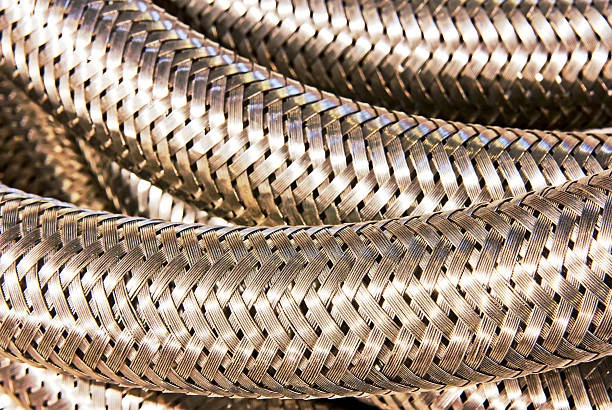
In industrial fluid systems, plumbing networks, automotive engineering, and mechanical installations, the braided hose is a critical component. It provides flexibility while maintaining strength, allowing fluid or gas to flow safely under pressure, even in harsh conditions. But what exactly makes a braided hose work? Understanding the principles behind braided hose design and performance helps users, engineers, and procurement managers make informed choices for their specific applications.
1. Principle of Internal Fluid Containment
At its core, the primary purpose of a braided hose is to contain and transport a fluid—whether it’s water, gas, oil, air, steam, or chemicals—without leaking or rupturing. The inner core of the hose, typically made from rubber (EPDM), PTFE, or PVC, acts as the main fluid carrier.
2. Principle of Pressure Resistance through Braiding
The braided hose derives its strength from the braided outer layer, which is most often made from stainless steel, polyester, or nylon. This braided sleeve is engineered to distribute internal pressure evenly across the hose surface. As pressure increases, the braided layer contracts radially and expands axially, a mechanical principle that contains internal forces and prevents hose expansion.
✅ Example: In high-rise buildings across New York or Sydney, stainless braided hoses are used in plumbing systems to resist high pressure from municipal water supply.
3. Principle of Flexibility and Mechanical Freedom
Unlike rigid pipes, braided hoses allow for flexible movement. This is essential in systems that experience vibration, motion, or thermal expansion. The helical or woven braiding pattern supports controlled flexing without kinking or buckling. This principle makes braided hoses ideal in automotive engines, HVAC systems, and robotic automation arms.
4. Principle of Thermal Stability
In many applications—from steam systems in industrial UK plants to hot water heaters in Canadian homes—temperature fluctuation is a constant. High-quality braided hoses with PTFE cores can withstand temperatures from -70°C to +260°C. This principle of thermal stability ensures reliable operation even under extreme heat or cold.
5. Principle of Chemical Compatibility
One of the core principles in choosing a braided hose is ensuring that the inner core material is chemically compatible with the fluid being transported. For instance:
- PTFE resists aggressive chemicals (acids, solvents, fuels)
- EPDM works well with hot water and steam
- PVC is suited for non-corrosive, low-pressure fluids
Failing to adhere to this principle may lead to hose degradation, leakage, or catastrophic failure.
6. Principle of Connection Integrity
A braided hose is only as reliable as its fittings and connectors. Whether using NPT, BSP, compression, or quick-connect ends, the principle is that the connection must form a secure, leak-free seal. In mechanical and industrial systems, fittings are typically crimped or swaged onto the hose to prevent disconnection under pressure.
✅ In factories across Birmingham, UK, or Ontario, Canada, hoses used in coolant or oil systems feature stainless steel fittings with ISO-certified crimping for maximum safety.
7. Principle of Vibration Absorption
Mechanical systems generate vibration from motors, compressors, pumps, and valves. The braided hose absorbs this energy, protecting connected equipment and preventing stress fractures at joints. This principle makes braided hoses essential in industrial, automotive, and HVAC mechanical rooms.
8. Principle of Space Optimization
Space is often limited in mechanical rooms, under sinks, behind walls, or inside engines. Their flexible nature helps engineers maximize utility in tight layouts—especially in dense urban installations like London apartments or downtown San Francisco hotels.
9. Principle of Safety Under Load
Braided hoses are engineered with safety factors, often 3 to 4 times the working pressure, to accommodate surges, spikes, or accidental overpressure. This principle ensures the hose won’t burst under short-term stress, protecting people, property, and systems.
✅ In fire sprinkler systems throughout Toronto, braided hoses are required to meet UL/CSA burst pressure standards to prevent failure in emergency situations.
10. Principle of Compliance and Certification
The final principle governing braided hose usage is regulatory compliance. In many countries, braided hoses must meet standards such as:
| Region | Relevant Standards |
|---|---|
| United States | NSF/ANSI 61, UL, ASME, SAE |
| Canada | CSA B125, ULC |
| United Kingdom | WRAS, BS EN ISO 10380 |
| Australia | WaterMark, AS/NZS 3499 |
A certified braided hose ensures it meets health, safety, and durability criteria established by industry authorities. This is essential in municipal, commercial, and industrial installations.
Conclusion: Braided Hose Principles Drive Real-World Performance
By understanding these 10 design principles, contractors, engineers, and product buyers can select the right hose for plumbing, industrial, or mechanical use—ensuring long-term reliability and compliance.
Whether used in New York skyscrapers, London hotels, Toronto industrial parks, or Sydney factories, the braided hose remains a backbone component in safe and efficient fluid systems.
Contact
IFAN is a professional manufacturer with 30 years of experience, dedicated to producing high-quality plastic pipes, fittings, and valves. Our products include brass valves, PPR valves, as well as various pipes and fittings to meet different customer needs. Whether you need plumbing and drainage pipes or valve products. IFAN can provide a diverse range of high-quality, cost-effective products to support your projects. Below is our contact information.
We will reply your email or fax within 24 hours.
You can call us at any time if there is any question on our production.
Pls Mailto:[email protected]







Recent Comments