
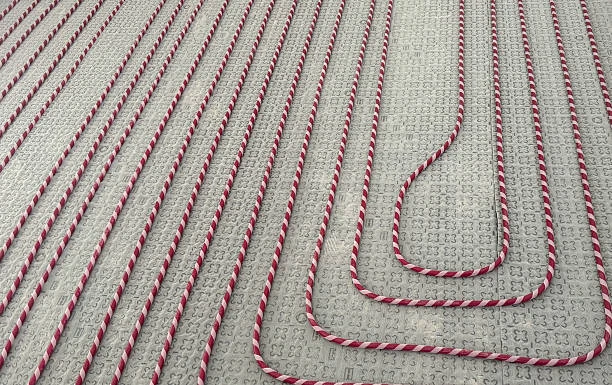
Introduction to a Modern Heating System
PEX floor heating represents a significant advancement in residential and commercial comfort technology. This system transforms an entire floor surface into a gentle, efficient radiator. Unlike traditional heating methods that warm the air, radiant floor heating provides even warmth directly to people and objects in a room. The core of this technology relies on a network of cross-linked polyethylene (PEX) tubes installed beneath the floor. Understanding the mechanical principles behind this system reveals why it is so effective, reliable, and efficient. This article will explore the key mechanical components and engineering considerations that make PEX floor heating a superior choice.
The Core Component: PEX Tubing Explained
The foundation of the entire system is the PEX tubing itself. Manufacturers create this tubing from high-density polyethylene that undergoes a cross-linking process. This process enhances the polymer’s molecular structure, giving PEX its remarkable properties. The tubing exhibits excellent flexibility, allowing installers to snake it through floor structures with ease. Furthermore, PEX has high temperature resistance and a unique shape memory. This means the tubing can expand and contract with temperature changes and return to its original form. These mechanical characteristics are crucial for long-term durability and leak-free performance under constant thermal cycling.
The Manifold: System Control Center
The manifold acts as the central hub or control center for the PEX floor heating system. This crucial component, typically made from brass or stainless steel, distributes heated water from the source to individual heating circuits. Each circuit connects to the manifold via flow meters and control valves. These valves allow for precise mechanical balancing of the system. An installer can adjust the flow rate to each loop, ensuring even heat distribution across all zones. This mechanical balancing is essential for compensating for different loop lengths and heat loads, guaranteeing uniform comfort.
Mechanical Connection Methods
Creating secure, reliable connections between PEX tubes and the manifold is paramount. The industry primarily uses two mechanical methods: crimp and press-connect systems. The crimp method involves placing a copper or stainless steel ring over the tube and compressing it with a special tool. The press-connect system uses a fitting that is compressed with powerful jaws, creating a permanent seal in seconds. Both methods produce robust, leak-proof connections that can withstand the system’s operating pressure. The choice often depends on installer preference and local building codes, but both ensure mechanical integrity.
The Role of the Circulator Pump
The circulator pump is the heart of a hydronic PEX floor heating system. This electrically powered pump provides the mechanical force to move heated water from the boiler or water heater through the manifold, into the PEX circuits, and back again. Selecting a correctly sized pump is critical for system efficiency. An undersized pump will not provide adequate flow, leading to cold spots. An oversized pump will consume excess electricity and generate unnecessary noise. Modern, variable-speed pumps automatically adjust their output to match the system’s demand, optimizing energy use and performance.
System Design and Hydronic Balancing
Before installation begins, a detailed mechanical design is essential. This process involves calculating the heat loss of each room to determine the required heat output. Based on these calculations, engineers design the layout of the PEX tubing, including spacing between loops and total circuit lengths. Hydronic balancing, achieved at the manifold, ensures that each circuit receives the correct flow rate. This prevents short circuits from overheating while ensuring longer circuits provide sufficient warmth. Proper mechanical design is the single most important factor for achieving a comfortable and efficient system.
Essential Installation Tools
Professional installation requires specialized mechanical tools to ensure reliability. These tools include PEX tube cutters for creating clean, square cuts essential for proper sealing. Installers also use specific crimping or press-fitting tools for making connections. For organization and efficiency, layout tools and reels help manage the long lengths of tubing. Perhaps the most critical tool is the pressure testing kit. After installation, the system is pressurized with water or air to verify that every connection is perfectly sealed before the floor covering is applied.
Integration with Heat Sources
A PEX floor heating system is a distribution method that requires an external heat source. The system works efficiently with various mechanical heat sources. These can include gas or oil-fired boilers, electric boilers, air-to-water heat pumps, or even solar thermal panels. A key mechanical component for integration is the mixing valve. This valve blends hot water from the heat source with cooler return water from the floor loops. This controls the temperature entering the PEX tubing, protecting the floor from excessive heat and optimizing the efficiency of condensing boilers and heat pumps.
Underfloor Insulation: Maximizing Efficiency
A critical mechanical component installed beneath the PEX tubing is the insulation panel. These panels, usually made from extruded polystyrene (XPS), serve two vital functions. Firstly, they provide thermal insulation that directs heat upward into the living space instead of being lost downward to the subfloor. Secondly, they offer a stable, secure base for attaching the PEX tubing. Many panels feature pre-marked grids or snap-in channels that simplify the installation process and ensure consistent tube spacing for even heat distribution across the entire floor area.
Conclusion: The Synergy of Mechanical Components
In summary, the comfort of a PEX floor heating system is a direct result of precise mechanical engineering. Each component, from the flexible PEX tubing and central manifold to the circulator pump and insulation, plays a vital role. The synergy between these parts creates a heating solution that is silent, energy-efficient, and exceptionally comfortable. Understanding the mechanics behind the system empowers homeowners to make informed decisions and appreciate the sophisticated technology operating beneath their feet. This reliable and well-engineered system truly represents a modern approach to indoor climate control.
IFAN’s international standards
IFAN products comply with multiple international standards, including BS 3505, BS 4346, ASTM D1785 SCH40, ASTM D1785 SCH80, DIN, GB, DWV, ASTM D2665, ASTM D2241, ASTM D2729, ASTM F441/F441M, ISO 1452 Series standards, EN ISO 1452, DIN 8061/8062, GB/T 10002 Series standards, AS/NZS 1477, JIS K6741, CSA B137.3, NSF/ANSI 14, TIS 17-2532/1131-2535, among others. These certifications ensure that IFAN piping systems meet global requirements for safety, durability, and performance.
Contact
IFAN is a professional manufacturer with 30 years of experience, dedicated to producing high-quality plastic pipes, fittings, and valves. Our products include brass valves, PPR valves, as well as various pipes and fittings to meet different customer needs. Whether you need plumbing and drainage pipes or valve products. IFAN can provide a diverse range of high-quality, cost-effective products to support your projects. Below is our contact information.
We will reply your email or fax within 24 hours.
You can call us at any time if there is any question on our production.
Pls Mailto:[email protected]











Recent Comments