
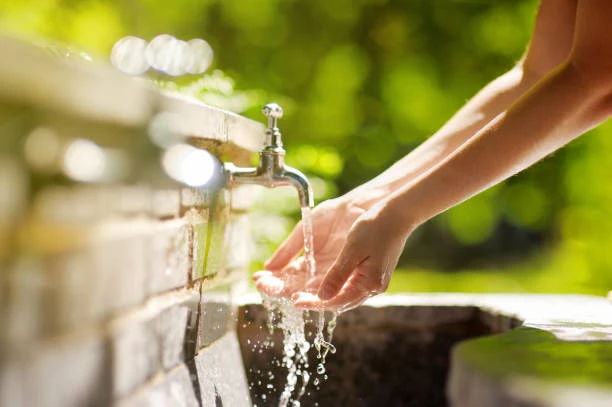
1. The Carbon Cost of Convenience: Bottled Water’s Dirty Secret
As a consumer, I never realized my bottled water habit was a climate crime—until I learned it takes 3 liters of water and 250 mL of oil to produce one liter of bottled water. The plastic alone emits 6 kg of CO₂ per kilogram made (UNEP). In contrast, tap water’s carbon footprint is 300–1,000 times lower, according to a 2023 University of Southampton study. My switch to tap water saved 82 kg of CO₂ annually—equivalent to skipping a 200-mile car ride. Bottled water isn’t just pricey; it’s planetary sabotage.
2. From Source to Sink: The Invisible Journey of Tap Water’s Carbon
Tap water’s carbon cycle starts at the source. Local reservoirs and groundwater reduce transport emissions versus Fiji Water’s 5,000-mile ocean voyage. Treatment plants, though energy-intensive, are decarbonizing: Paris runs its facilities on 100% renewable energy, cutting CO₂ by 40% since 2020. Even the pipes matter—cities like Copenhagen use AI to fix leaks, saving 20% energy. My tap water’s journey emits just 0.15 g CO₂ per liter; Evian’s bottle? 160 g.
3. Plastic’s Eternal Loop: How Bottles Disrupt Natural Carbon Sinks
Plastic bottles don’t just emit carbon—they throttle Earth’s ability to absorb it. When plastic waste chokes oceans, it harms phytoplankton, which capture 40% of global CO₂. A 2024 study found microplastics reduce phytoplankton growth by 30%, risking a 5% drop in ocean carbon uptake by 2050. My stainless steel bottle breaks this cycle: 1 reusable bottle prevents 1,460 plastic bottles from entering landfills or seas over 4 years.
4. The Power of “No”: How Consumer Choices Reshape Supply Chains
Every time I refuse bottled water, I starve a polluting industry. In 2023, U.S. bottled water sales fell 4% as更多人 embraced taps, avoiding 1.2 million tons of CO₂. Cafés like Blue Bottle now offer discounts for bringing reusable cups—a small act with big ripple effects. If 10% of bottled water drinkers switched to tap, global emissions would drop by 75 million tons yearly (equal to shutting down 16 coal plants).
5. Circular Water Systems: Cities Leading the Carbon-Neutral Charge
Forward-thinking cities show tap water’s climate potential. Singapore’s NEWater program recycles wastewater into ultra-clean tap water, slashing energy use by 30%. Amsterdam’s “Rainproof” initiative channels stormwater into reservoirs, reducing pumping needs. Even my hometown’s new filtration plant uses solar power, trimming bills by $200K/year. These innovations prove tap water can be a net-negative carbon system—storing more CO₂ than it emits through green infrastructure.
6. The Carbon Literacy Gap: Why Most of Us Underestimate Water’s Role
A 2024 Yale survey found 70% of consumers don’t link water choices to climate change. Yet, the global water sector emits 10% of worldwide GHGs—more than aviation. I educate friends using simple analogies: One plastic bottle = 1 mile driven. Tap water’s low-tech fix? A $20 filter removes 99% of contaminants while keeping CO₂ minimal. Knowledge is power: After I shared these stats, my office replaced bottled coolers with taps, cutting 1.2 tons of CO₂ yearly.
7. From Faucet to Future: A Blueprint for Carbon-Conscious Hydration
My tap water journey taught me that individual actions scale. Here’s my blueprint:
- Advocate: Push for public fountains and bottle-refill laws (like Hawaii’s 2024 mandate).
- Invest: Support municipal bonds funding green water infrastructure.
- Innovate: Use apps like JouleBug to track water-related CO₂ savings.
By 2030, cities like L.A. aim for 100% carbon-neutral tap water. With every glass I drink, I’m voting for that future.
Conclusion: Tap Water—The Climate Solution in Your Kitchen
Choosing tap water isn’t just hydration; it’s a daily climate strike. It shrinks carbon footprints, protects oceans, and defunds polluters. I’ve saved $500/year and 1.3 tons of CO₂ since quitting bottled water—proof that small acts ignite big change. The carbon cycle isn’t a distant science lesson; it’s flowing from your faucet. Drink up, and let’s turn the tide.
IFAN PPH products comply with international standards such as ISO 15494 series standards, EN ISO 15494, DIN 8077/8078, ASTM F2389, GB/T 19472 series standards, and NBR 15494.
Contact
IFAN is a professional manufacturer with 30 years of experience, dedicated to producing high-quality plastic pipes, fittings, and valves. Our products include brass valves, PPR valves, as well as various pipes and fittings to meet different customer needs. Whether you need plumbing and drainage pipes or valve products. IFAN can provide a diverse range of high-quality, cost-effective products to support your projects. Below is our contact information.
We will reply your email or fax within 24 hours.
You can call us at any time if there is any question on our production.
Pls Mailto:[email protected]






Recent Comments