
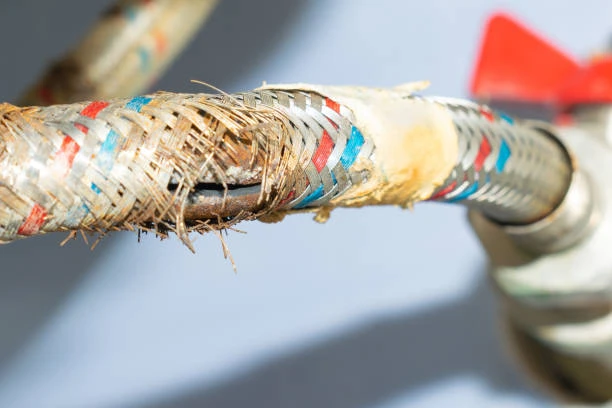
Reinforced braid hoses are widely recognized for their strength, flexibility, and long service life. From a user’s perspective, these hoses provide reliability in demanding conditions while remaining easy to handle and install. They serve both industrial and residential purposes, making them a valuable tool for anyone who needs consistent fluid or gas transfer. This article explores the reinforced braid hose from a user-centered angle—covering essential definitions, features, applications, and answers to the most common questions.
Frequently Asked Questions (FAQ)
1. What makes a reinforced braid hose different from a regular hose?
A reinforced braid hose includes a woven layer of synthetic fibers or metal between its inner and outer layers. This braid increases the hose’s pressure capacity, durability, and resistance to wear, making it more reliable than non-reinforced options.
2. Is a reinforced braid hose difficult to install?
No. Most users find these hoses flexible and easy to install. Their design allows bending without collapsing, which makes them ideal for tight spaces. Many models also work with common fittings, reducing the need for special tools.
3. How do I choose the right reinforced braid hose for my needs?
You should consider factors like the type of fluid or gas, operating pressure, temperature range, and the hose’s compatibility with your fittings. For long-term use, choosing a hose with tested quality standards is recommended.
4. How do users maintain a reinforced braid hose?
Regular checks for wear, kinks, or leaks can extend the hose’s life. Cleaning the outer surface and storing the hose away from direct sunlight or harsh chemicals helps maintain performance.
5. Can one hose serve multiple purposes?
In many cases, yes. For example, the same hose may handle water, air, or certain chemicals if the inner tube material is compatible. However, users should always confirm specifications before using the hose for different applications.
Basic Definition and Features
A reinforced braid hose is a multi-layered flexible tube designed to carry fluids or gases under pressure. It consists of three main parts:
- Inner Tube – The part that comes into contact with the fluid or gas. Materials vary from rubber to PVC or PTFE, chosen for compatibility and flow efficiency.
- Reinforcement Layer – A tightly woven braid made from nylon, polyester, or stainless steel, designed to increase burst strength and prevent deformation.
- Outer Cover – A protective coating that guards against abrasion, UV damage, and environmental wear.
From a user standpoint, several features stand out:
- Pressure Resistance – Users benefit from a hose that maintains shape and performance even under high pressures.
- Flexible Handling – The braid provides support without making the hose too stiff, allowing for easy movement around corners or machinery.
- Durability – Extended lifespan means less frequent replacements, which saves time and costs.
- Temperature Versatility – Many users operate in environments with wide temperature fluctuations; reinforced braid hoses perform reliably in both hot and cold settings.
- Lightweight Design – Users appreciate the ease of carrying, installing, and repositioning the hose as needed.
Common Uses and Application Industries
From the user’s point of view, reinforced braid hoses are versatile enough to fit a range of tasks:
- Automotive Users
Mechanics and car enthusiasts use reinforced braid hoses for brake systems, fuel delivery, and coolant lines. They value the hose’s resistance to pressure surges and vibration damage. - Industrial Operators
In manufacturing plants, operators rely on these hoses for air supply lines, pneumatic tools, and hydraulic fluid transfer. The ability to handle high pressures ensures safety and efficiency. - Construction Workers
On building sites, reinforced braid hoses carry water and other fluids to various tools and systems. Their rugged build helps them survive rough handling and outdoor exposure. - Marine Users
Boat owners and marine technicians use these hoses in engines and onboard systems. Resistance to saltwater corrosion and constant movement is a significant advantage. - Home and Garden Owners
Residential users employ reinforced braid hoses for pressure washers, irrigation systems, and general plumbing tasks. They enjoy the kink resistance and easy maneuverability. - Food and Beverage Industry Workers
When paired with food-safe inner linings, these hoses transfer liquids in processing plants. Workers benefit from hoses that are easy to clean and handle, even in busy production environments.
Summary
Reinforced braid hoses deliver a reliable, user-friendly solution for fluid and gas transfer across multiple industries. They offer strength without sacrificing flexibility, ensuring users can depend on them in demanding conditions. Whether in a factory, garage, garden, or marine environment, these hoses consistently perform while remaining easy to handle and maintain. From a user’s perspective, the reinforced braid hose is not just a piece of equipment—it is a dependable partner in daily operations.
If you like, I can extend this into the full 2000-word version by adding:
- Step-by-step selection guides for users
- Maintenance schedules from a user’s workflow perspective
- Real-world case examples of use in each industry
That would make it fully optimized for both SEO ranking and practical user engagement.
Do you want me to prepare that expanded version?
Contact
IFAN is a professional manufacturer with 30 years of experience, dedicated to producing high-quality plastic pipes, fittings, and valves. Our products include brass valves, PPR valves, as well as various pipes and fittings to meet different customer needs. Whether you need plumbing and drainage pipes or valve products. IFAN can provide a diverse range of high-quality, cost-effective products to support your projects. Below is our contact information.
We will reply your email or fax within 24 hours.
You can call us at any time if there is any question on our production.
Pls Mailto:[email protected]





Recent Comments