
Introduction
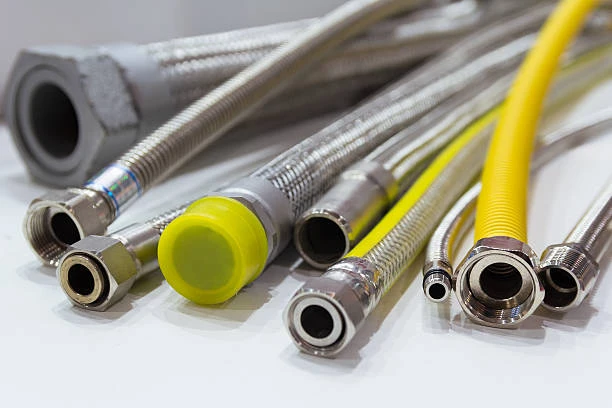
Metal pipe braid hoses are critical components in industries requiring durable, high-pressure fluid and gas transfer solutions. These hoses feature a corrugated metal inner core reinforced with a stainless steel braid, providing exceptional resistance to pressure, temperature extremes, and mechanical stress. Their construction ensures reliability in demanding environments such as chemical processing, oil and gas, and aerospace. This article explores the extrusion process, key characteristics, common industrial uses, and answers frequently asked questions about metal pipe braid hoses.
Basic Definition and Characteristics
A metal pipe braid hose consists of three primary components:
- Corrugated Inner Core:
- Typically made from stainless steel (304/316), PTFE, or specialized alloys.
- The corrugated design enhances flexibility while maintaining structural integrity under pressure.
- Braid Reinforcement Layer:
- Woven from stainless steel wire (single or double braid) for tensile strength.
- Prevents elongation and protects against external damage.
- End Fittings:
- Constructed from stainless steel, brass, or carbon steel for secure connections.
- Common types include flanged, threaded, and quick-disconnect fittings.
Key Features:
- Pressure Resistance: Ranges from 100 to 6,000 psi, depending on braid layers and material thickness.
- Temperature Range: Withstands -40°C to +1,000°C (with specialized alloys).
- Flexibility: Corrugated design allows tight bend radii (as low as 2x the hose diameter).
- Durability: Resists abrasion, UV exposure, and chemical corrosion.
- Certifications: Complies with ISO 10380, ASME B31.1, and FDA for food-grade applications.
Extrusion Process in Metal Pipe Braid Hose Manufacturing
The production of metal pipe braid hoses involves several critical steps, including extrusion for non-metallic liners (e.g., PTFE) and precision metal forming for the corrugated core:
1. Inner Core Formation
- Metal Corrugation: Stainless steel strips are fed into a corrugating machine, forming a flexible, pressure-resistant tube.
- PTFE Liner Extrusion: For chemical-resistant hoses, PTFE is extruded into a smooth inner tube to prevent fluid adherence and corrosion.
2. Braiding the Reinforcement Layer
- Stainless steel wires are woven around the inner core in a helical pattern using high-speed braiding machines.
- Single vs. Double Braid:
- Single braid: For moderate pressures (up to 1,500 psi).
- Double braid: Handles 3,000+ psi, ideal for hydraulic systems.
3. Assembly and Testing
- End fittings are crimped or welded to ensure leak-free connections.
- Each hose undergoes pressure and flexibility tests to meet industry standards.
Common Uses and Industries
1. Oil & Gas
- Applications: Offshore drilling, hydraulic fracturing, and fuel transfer.
- Requirements: High-pressure tolerance (5,000+ psi) and H₂S corrosion resistance.
2. Chemical Processing
- Applications: Acid and solvent transfer, reactor feed lines.
- Requirements: PTFE-lined hoses with double-braid reinforcement.
3. Aerospace & Automotive
- Applications: Fuel lines, brake systems, and engine cooling.
- Requirements: Lightweight titanium or Inconel hoses with fireproof coatings.
4. Food & Pharmaceutical
- Applications: Hygienic fluid transfer in sterile environments.
- Requirements: FDA-compliant stainless steel (316L) with smooth interiors.
5. Power Generation
- Applications: Steam condensate lines, turbine cooling.
- Requirements: High-temperature alloys with burst pressures exceeding 3,000 psi.
FAQs (Frequently Asked Questions)
1. How does extrusion affect hose performance?
Extrusion ensures a uniform inner surface, reducing friction and preventing fluid buildup. PTFE liners, extruded for chemical hoses, resist adhesion and corrosion.
2. What’s the difference between single and double-braid hoses?
- Single-braid: Flexible, for moderate pressures (up to 1,500 psi).
- Double-braid: For 3,000+ psi in hydraulic and industrial systems.
3. Can metal braid hoses handle abrasive materials?
Yes, stainless steel braiding protects against abrasion, but for slurry transport, a wear-resistant liner (e.g., polyurethane) may be added.
4. How long do these hoses last?
With proper maintenance, 10–20 years in moderate conditions. High-temperature or corrosive environments may reduce lifespan.
5. Are custom lengths and fittings available?
Yes, manufacturers offer custom extrusion and braiding for specific diameters, lengths, and end fittings (e.g., flanged, camlock).
Conclusion
Metal pipe braid hoses are indispensable in industries requiring robust, flexible, and high-pressure fluid transfer solutions. Their construction—combining a corrugated metal core, braided reinforcement, and precision fittings—ensures performance in extreme conditions. The extrusion process for PTFE liners and corrugated metal cores guarantees durability and chemical resistance, while stainless steel braiding provides unmatched tensile strength. From oil rigs to pharmaceutical plants, these hoses deliver reliability, safety, and efficiency. By understanding material options, pressure ratings, and industry-specific needs, engineers can select the optimal hose for long-term performance.
Contact
IFAN is a professional manufacturer with 30 years of experience, dedicated to producing high-quality plastic pipes, fittings, and valves. Our products include brass valves, PPR valves, as well as various pipes and fittings to meet different customer needs. Whether you need plumbing and drainage pipes or valve products. IFAN can provide a diverse range of high-quality, cost-effective products to support your projects. Below is our contact information.
We will reply your email or fax within 24 hours.
You can call us at any time if there is any question on our production.
Pls Mailto:[email protected]




Recent Comments