
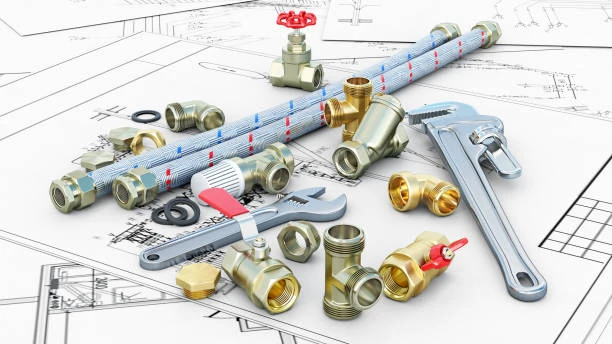
Threaded ball valves play a vital role in controlling fluid flow across industries, from oil and gas to water treatment. Their reliability hinges on rigorous quality standards during design, manufacturing, and testing. This article explores key factors that define and ensure the quality of threaded ball valves, empowering users to make informed decisions.
1. Prioritize Material Selection
High-quality threaded ball valves begin with durable materials. Manufacturers use corrosion-resistant metals like stainless steel, brass, or carbon steel for valve bodies and balls. Ensure seals and seats incorporate robust materials such as PTFE (Teflon) or reinforced elastomers to withstand temperature fluctuations and chemical exposure. Always verify material certifications to confirm compliance with ASTM or ISO standards.
2. Validate Manufacturing Precision
Precision machining ensures smooth operation and leak-free performance. Reputable manufacturers employ CNC machines to craft valve components with tight tolerances. Inspect critical areas like the ball’s spherical surface, thread accuracy, and seat alignment. Even minor imperfections in threading or sealing surfaces can compromise valve integrity. Demand documentation of machining processes to guarantee consistency.
3. Implement Rigorous Pressure Testing
Pressure testing is non-negotiable for quality assurance. Reputable suppliers test valves at pressures exceeding their rated capacity (e.g., 1.5x the maximum operating pressure) to identify weaknesses. Hydrostatic tests check for leaks in the body and seals, while pneumatic tests validate performance with gases. Insist on test certificates that specify pressure levels, duration, and results.
4. Verify Compliance With Industry Standards
Certifications like ISO 9001, API 6D, or CE mark demonstrate adherence to global quality benchmarks. For threaded ball valves, confirm compliance with standards such as ASME B16.34 (pressure ratings) or ISO 5211 (mounting dimensions). These certifications ensure the valve meets safety, durability, and interoperability requirements for your application.
5. Assess Anti-Corrosion Treatments
Corrosion resistance directly impacts valve lifespan. High-quality valves feature protective coatings like electroplating, epoxy paints, or passivation for stainless steel components. For harsh environments, such as marine or chemical processing, verify the use of superalloys or thermoplastic-lined bodies. Always review corrosion test reports, including salt spray or chemical immersion results.
6. Evaluate Ergonomic Design Features
A well-designed threaded ball valve balances functionality and usability. Check for features like a low-torque handle, clear open/close indicators, and standardized thread dimensions (NPT, BSPP). High-quality valves minimize stress concentrations through smooth internal geometries, reducing crack risks. Additionally, compact designs save space without sacrificing flow capacity.
7. Demand Traceability and Documentation
Traceability ensures accountability across the supply chain. Reliable manufacturers provide material test reports (MTRs), heat numbers, and batch-specific inspection records. Each valve should have a unique serial number linking it to production data. This transparency allows users to track quality metrics and address defects promptly.
8. Partner With Certified Suppliers
Supplier credibility is paramount. Choose vendors with proven expertise in threaded ball valve manufacturing and third-party audited facilities. Evaluate their quality control protocols, such as statistical process control (SPC) or Six Sigma methodologies. Establish long-term partnerships to ensure consistent quality and prioritize suppliers offering warranties or performance guarantees.
Quality in threaded ball valves stems from meticulous material choices, precision engineering, and uncompromising testing. By prioritizing certified products, verifying manufacturing processes, and collaborating with reputable suppliers, users can secure valves that deliver safety, efficiency, and longevity. Invest in quality today to avoid operational failures and costly replacements tomorro.
Product Standards
PPR ball valves comply with several international standards to ensure quality and performance. ISO 15874 and EN 15874 establish the requirements for PPR piping systems, including mechanical properties and durability. ASTM F2389 defines the specifications for polypropylene pipes and fittings used in pressurized applications. DIN 8077/8078 sets the dimensional and material requirements for PPR pipes, ensuring compatibility with various valve types. GB/T 18742 outlines the technical parameters for PPR piping systems in China, covering aspects such as pressure resistance and thermal stability. NBR 15884 serves as the Brazilian standard for PPR pipes, guaranteeing compliance with local plumbing regulations. These standards ensure that PPR ball valves deliver reliable performance in residential, commercial, and industrial applications.
Contact
IFAN is a professional manufacturer with 30 years of experience, dedicated to producing high-quality plastic pipes, fittings, and valves. Our products include brass valves, PPR valves, as well as various pipes and fittings to meet different customer needs. Whether you need plumbing and drainage pipes or valve products. IFAN can provide a diverse range of high-quality, cost-effective products to support your projects. Below is our contact information.
We will reply your email or fax within 24 hours.
You can call us at any time if there is any question on our production.
Pls Mailto:[email protected]








Recent Comments