
Certifications play a key role in ensuring the quality, safety, and compliance of braided rubber hoses. Whether used in industrial systems, automotive assemblies, plumbing connections, or food processing lines, certified hoses provide reassurance that they meet industry standards. Understanding the different certifications and what they imply helps buyers, engineers, and installers make smarter decisions. In this article, we explore the key certifications for braided rubber hoses, their meanings, and why they are essential in various applications.
FAQ: Frequently Asked Questions About Braided Rubber Hose Certifications
1. Why do braided rubber hoses need certification?
Certifications confirm that a hose meets specific safety, performance, and material standards. This ensures reliable operation and compliance with legal or industry requirements.
2. What are the most common certifications for braided rubber hoses?
Some of the most recognized certifications include ISO 9001, NSF, UL, SAE, WRAS, FDA, and CE. Each focuses on a different aspect, from quality management to food safety.
3. Does every industry require certified braided rubber hoses?
Yes, although the type of certification depends on the industry. For example, food-grade hoses require FDA or NSF certification, while hydraulic systems may follow SAE or ISO standards.
4. Can uncertified hoses be used safely?
Uncertified hoses may work in some applications, but they carry risks. They might not meet safety, chemical resistance, or pressure standards, leading to system failures or safety hazards.
5. How can I check if a braided rubber hose is certified?
Look for markings on the hose, product datasheets, or supplier declarations. Reputable manufacturers list all relevant certifications in their product documentation.
What Is a Braided Rubber Hose and Why Certification Is Important
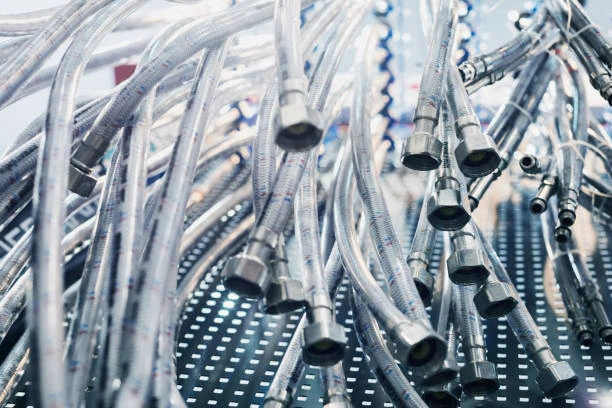
A braided rubber hose is a flexible tubing system designed to transport fluids or gases under pressure. Its construction typically includes:
- Inner rubber core: Made from materials such as EPDM, NBR, or silicone.
- Braided reinforcement: Woven stainless steel, polyester, or aramid fibers to improve strength and pressure resistance.
- Protective outer layer: Shields the hose from wear, weather, and chemical exposure.
Certifications become essential because braided rubber hoses operate in systems where pressure, temperature, and chemical exposure are common. Without certification, there’s no assurance the hose can handle these conditions safely.
Key Certifications for Braided Rubber Hoses
Understanding the various certifications helps users select the right hose for their specific application. Below are the most commonly used standards:
ISO (International Organization for Standardization)
ISO 9001 is the most widely recognized certification related to quality management. If a manufacturer is ISO 9001 certified, it indicates that their hoses are produced under strict quality control processes. While this does not certify the product directly, it assures consistency in production.
ISO 14001 covers environmental management, which may be relevant in industries with sustainability concerns.
ISO 6805 / ISO 18752 standards apply directly to rubber hoses used in hydraulic and industrial systems, confirming hose strength and safety.
SAE (Society of Automotive Engineers)
SAE sets rigorous standards for hoses used in automotive and aerospace applications. For example:
- SAE J1401: Hydraulic brake hoses
- SAE J30: Fuel hoses
- SAE J517: Hydraulic hoses
A hose that meets SAE specifications ensures that it can withstand extreme temperatures, pressure, and dynamic conditions common in vehicles and machinery.
NSF (National Sanitation Foundation)
NSF certification is essential for hoses that carry drinking water or come into contact with food. There are different levels of NSF certification, such as:
- NSF/ANSI 61: Confirms safe contact with potable water.
- NSF 51: Covers food equipment materials.
Braided rubber hoses with NSF approval are often used in household plumbing, food processing plants, and beverage dispensers.
WRAS (Water Regulations Advisory Scheme)
WRAS approval applies to plumbing products in the United Kingdom. It ensures that hoses used in water supply systems will not contaminate drinking water or degrade performance. A WRAS-approved braided hose is essential in UK residential and commercial plumbing installations.
FDA (Food and Drug Administration)
For hoses used in the U.S. food, beverage, and pharmaceutical sectors, FDA compliance is a must. FDA-certified hoses are made with materials that will not leach chemicals or cause contamination. These hoses often feature a smooth, non-porous rubber core (e.g., silicone or EPDM) and are commonly used in dairy, brewing, and packaging lines.
UL (Underwriters Laboratories)
UL certifies products for safety in North American markets. For braided rubber hoses, UL 569 covers hose assemblies for LP gas. UL recognition ensures that the hose has passed electrical, thermal, and mechanical safety tests.
CE (Conformité Européenne)
The CE mark is required for hoses sold in the European Union. It indicates that the hose meets EU safety, health, and environmental standards. CE-marked hoses are common in industrial, medical, and consumer applications across Europe.
How Certifications Affect Braided Rubber Hose Selection
Knowing which certifications a hose carries helps you match the right product to your job. Here’s how different sectors depend on certified hoses:
Automotive and Transportation
Automotive manufacturers rely on SAE-certified hoses to maintain fuel, brake, and cooling systems safely. These certifications ensure that the hoses resist engine heat, fuel additives, and high vibration levels.
For electric vehicles and aircraft, more specialized certifications may apply, often involving strict electrical resistance and flame-retardant testing.
Plumbing and Water Supply
Plumbers and water treatment professionals look for NSF, WRAS, and CE-certified hoses to ensure safe drinking water delivery. Hoses without these certifications can cause taste, odor, or contamination issues.
Flexible braided rubber hoses with these certifications are used in kitchens, bathrooms, and outdoor spigots.
Industrial Applications
In factories, construction equipment, or refineries, ISO and SAE standards confirm a hose’s ability to endure high pressure and temperature. These certifications help reduce the risk of blowouts, leaks, and costly downtime.
UL-certified hoses are also used in flammable environments, such as propane transfer or fuel lines.
Food and Beverage Processing
Hoses used in breweries, dairies, or restaurants must be FDA- or NSF-approved. They are designed to prevent cross-contamination and remain flexible for frequent cleaning and sanitization.
In this industry, a certification is not just a preference but often a legal requirement for health and safety compliance.
Chemical and Pharmaceutical Industries
In laboratories and chemical plants, hoses may need ISO and CE certifications for chemical resistance, while pharmaceutical facilities often require FDA and USP Class VI (for biocompatibility) certifications.
Certified hoses ensure no reactions occur between the hose material and the substances transported.
Summary
Certifications in braided rubber hoses serve more than just formalities—they reflect the product’s performance, safety, and reliability in real-world applications. By understanding and checking for the correct certifications, you ensure compliance with legal requirements, industry standards, and most importantly, safety.
To recap:
- ISO, SAE, NSF, WRAS, FDA, UL, and CE are the most common and trusted certifications.
- These certifications cover various needs: food safety, drinking water safety, high-pressure resistance, thermal durability, and chemical resistance.
- Certified hoses ensure proper function in automotive, plumbing, industrial, and food-grade environments.
- Always review product documentation or supplier claims for certification proof before selecting a hose.
Choosing a certified braided rubber hose may require slightly more research, but it pays off in performance, safety, and peace of mind. For any professional or critical application, certifications are not optional—they are essential.
IFAN Quality and Building Standards
As a trusted brand in plumbing and building systems, IFAN offers stainless steel braided hoses engineered to meet international building regulations. All IFAN hoses meet or exceed:
- ISO 10380 standards for mechanical performance
- WRAS and NSF certifications for potable water safety
- CE-marked products in line with EU building codes
- 304 and 316 stainless steel braiding for maximum durability
- Strict factory testing for burst pressure, fatigue, and thermal performance
Whether for commercial towers, schools, hospitals, or private homes, IFAN hoses provide a reliable, high-quality solution for every building environment.
Contact
IFAN is a professional manufacturer with 30 years of experience, dedicated to producing high-quality plastic pipes, fittings, and valves. Our products include brass valves, PPR valves, as well as various pipes and fittings to meet different customer needs. Whether you need plumbing and drainage pipes or valve products. IFAN can provide a diverse range of high-quality, cost-effective products to support your projects. Below is our contact information.
We will reply your email or fax within 24 hours.
You can call us at any time if there is any question on our production.
Pls Mailto:[email protected]

Recent Comments