
1. Introduction: The Unsung Hero of Modern Kitchens
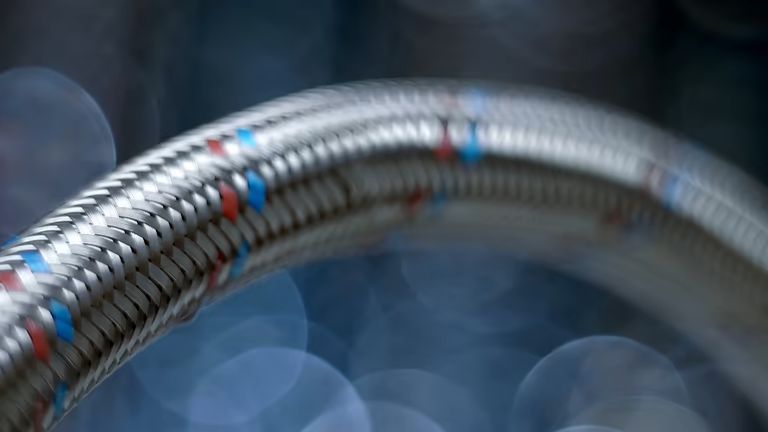
In contemporary kitchen design, the braided dishwasher hose stands as a critical yet often overlooked component. This specialized hose combines flexibility, durability, and pressure resistance to ensure reliable water supply and drainage for dishwashers. Unlike conventional rubber hoses, its woven metal or nylon reinforcement prevents kinks, leaks, and premature failure – essential qualities for appliances that handle hot water, detergents, and constant vibration. Whether in residential kitchens or commercial foodservice operations, these hoses play a vital role in maintaining hygiene standards and operational efficiency. This article explores the technical features, installation best practices, and diverse applications of braided dishwasher hoses, providing valuable insights for homeowners and professionals alike.
2. Frequently Asked Questions (FAQ)
Q1: How do I install a braided dishwasher hose correctly?
A: Follow these steps: 1) Turn off water and power. 2) Remove old hose and clean connections. 3) Attach new hose to water inlet using a compression fitting. 4) Secure drain hose to sink drain or garbage disposal. 5) Test for leaks by running a short cycle. Always use Teflon tape on threaded connections and avoid overtightening.
Q2: What’s the difference between stainless steel and nylon braided hoses?
A: Stainless steel variants offer superior heat resistance (up to 250°F) and pressure tolerance (300+ PSI), making them ideal for commercial dishwashers. Nylon braided hoses are lighter, more flexible, and cost-effective for residential use but have lower temperature limits (typically 140-180°F).
Q3: How often should I replace my dishwasher hose?
A: Inspect annually for cracks, bulges, or corrosion. Replace immediately if any damage is found. Manufacturers recommend replacement every 5-7 years as a preventive measure, even without visible wear.
Q4: Can these hoses be used for both hot and cold water supply?
A: Yes, most braided hoses are rated for both hot and cold water applications. Verify temperature specifications – premium models handle temperatures from 40°F to 250°F, while standard hoses operate between 40°F-180°F.
Q5: What causes hose leakage and how to prevent it?
A: Common causes include loose fittings, worn washers, or material degradation. Prevention tips: 1) Use high-quality stainless steel clamps. 2) Replace rubber washers every 2 years. 3) Avoid sharp bends during installation. 4) Leave 2-3 inches of slack to accommodate vibration.
3. Basic Definition and Technical Features
Braided dishwasher hoses consist of three engineered layers:
- Inner Tube: Made from EPDM rubber or reinforced PVC for chemical resistance and flexibility.
- Reinforcement Layer: Woven stainless steel or nylon fibers at 45-degree angles provide burst strength (typically 3x working pressure).
- Outer Jacket: Clear PVC or chrome-plated coating protects against abrasion and UV exposure.
Key performance characteristics:
- Pressure Rating: 150-300 PSI (10-20 bar) depending on reinforcement type.
- Bend Radius: Maintains flow efficiency at 90-degree bends without kinking.
- Certifications: Complies with NSF/ANSI 61 for drinking water safety and IAPMO standards.
- Compatibility: Works with all major dishwasher brands including Bosch, Miele, and KitchenAid.
4. Common Uses and Industrial Applications
Residential Kitchens
- Water Supply: Connects to angle stops under sinks, delivering pressurized water for washing cycles.
- Drainage Systems: Routes wastewater to sewer lines or garbage disposals.
- Portable Units: Flexible hoses enable easy connection to temporary kitchen setups.
Commercial Foodservice
- Restaurant Dishwashers: Withstands daily high-temperature sanitizing cycles.
- Catering Operations: Heavy-duty hoses handle continuous use in mobile dishwashing stations.
- Brewery Cleaning: Specialized hoses resist beer stone and caustic cleaning agents.
Industrial Settings
- Pharmaceutical Cleanrooms: Sterile braided hoses for glassware washing systems.
- Automotive Parts Washing: Solvent-resistant models for degreasing operations.
- Agricultural Processing: Food-grade hoses for produce washing lines.
5. Conclusion: The Foundation of Reliable Performance
Braided dishwasher hoses represent the perfect synergy of engineering and practicality. Their reinforced construction solves common failure points in traditional hoses, offering peace of mind through enhanced durability and safety. For homeowners, selecting the right hose involves matching material specifications to appliance requirements and usage patterns. Commercial operators benefit from specialized variants designed for extreme temperatures and chemical exposure. Regular inspection and timely replacement remain crucial for preventing water damage – a leading cause of kitchen repairs. As smart appliances evolve, we’re seeing innovations like leak detection sensors integrated into premium hoses. Whether powering a residential dishwasher or maintaining hygiene in a five-star restaurant, braided dishwasher hoses continue to be indispensable components in the modern pursuit of cleanliness and efficiency.
Contact
IFAN is a professional manufacturer with 30 years of experience, dedicated to producing high-quality plastic pipes, fittings, and valves. Our products include brass valves, PPR valves, as well as various pipes and fittings to meet different customer needs. Whether you need plumbing and drainage pipes or valve products. IFAN can provide a diverse range of high-quality, cost-effective products to support your projects. Below is our contact information.
We will reply your email or fax within 24 hours.
You can call us at any time if there is any question on our production.
Pls Mailto:[email protected]








Recent Comments