
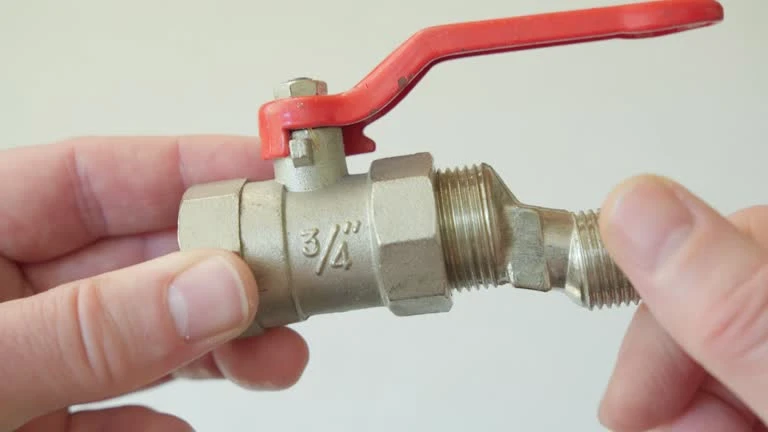
Essential Protection for Industrial Operations
First and foremost, high-precision pressure safety valve serve as vital safeguards in industrial environments. Not only do these specialized devices prevent catastrophic system failures, but they also effectively control excess pressure. Engineers specifically design them to respond instantly to dangerous pressure buildups. Across various sectors, critical applications span power plants, oil refineries, and chemical processing facilities. For instance, nuclear reactors particularly rely on these valves for primary coolant system protection. When pressure reaches predetermined set points, the valves automatically release it. Moreover, advanced models maintain system integrity while simultaneously minimizing product loss. Ultimately, their reliability directly impacts both operational safety and equipment longevity.
Cutting-Edge Valve Design Principles
Modern pressure safety valves incorporate innovative engineering solutions that significantly improve performance. Precision-machined components ensure consistent operation even under extreme conditions. Additionally, the balanced bellows design completely eliminates backpressure effects on valve operation. Beyond basic functionality, thermal relief features specifically protect against temperature-induced pressure fluctuations. Some advanced models even integrate smart sensors for real-time performance monitoring. In aerospace applications, manufacturers typically use inconel alloys because of their superior heat resistance. Similarly, food processing plants generally specify stainless steel construction for hygiene requirements. Each design element carefully addresses specific industry challenges and operational requirements.
Performance Specifications and Standards
Industry certifications strictly govern pressure safety valve manufacturing and operation. Specifically, ASME Section VIII Division 1 establishes design pressure requirements. Similarly, API 526 clearly outlines dimensional standards for flanged steel valves. To ensure reliability, manufacturers thoroughly test each unit at 110% of set pressure. Flow capacity ratings directly determine appropriate applications for specific models. Typically, operating temperatures range from -196°C to 538°C for standard valves. Meanwhile, pressure settings commonly span 15 psi to 6000 psi across product lines. These comprehensive specifications help engineers properly select valves for diverse system needs.
Specialized Applications Across Industries
In power generation plants, safety valves play crucial roles in steam turbine systems. Likewise, pharmaceutical manufacturers routinely install them on sterile processing equipment. For harsh environments, offshore drilling platforms require marine-certified valve solutions. Semiconductor fabrication, on the other hand, needs ultra-clean valve designs. Hydrocarbon processing specifically demands fire-safe configurations. Each industry sector presents unique material compatibility challenges that require careful consideration. Consequently, valve manufacturers develop application-specific solutions to meet these specialized needs. Proper selection ultimately prevents costly downtime and potential safety incidents.
Installation Best Practices
Without exception, qualified technicians must perform all safety valve installations. Proper orientation not only ensures optimal performance but also prevents potential malfunction. Installation manuals specifically specify torque values for all connection points. Additionally, downstream piping requires adequate support to prevent valve distortion. Most applications particularly need drip pan elbows for proper discharge management. After installation, periodic testing immediately verifies correct operation. Finally, proper documentation ensures full compliance with all regulatory requirements.
Maintenance and Testing Protocols
Routine maintenance actively preserves valve reliability and extends service life. Initially, monthly visual inspections check for leaks and corrosion signs. Subsequently, annual operational tests verify set pressure accuracy. For major overhauls, certified repair facilities should handle the work. Maintenance records must include all testing and adjustment data for traceability. Some modern valves now feature convenient self-diagnostic capabilities. Implementing predictive maintenance programs significantly reduces unexpected failures. Most importantly, proper care maintains continuous compliance with safety regulations.
Technological Advancements
Digital monitoring systems now continuously track valve performance metrics. Simultaneously, wireless sensors efficiently transmit real-time data to control rooms. Advanced materials increasingly improve corrosion resistance and durability. Meanwhile, 3D printing enables complex internal geometries for better flow characteristics. Some innovative valves even incorporate position indicators for remote monitoring. Predictive algorithms now analyze performance trends for optimal maintenance planning. Together, these technological advancements enhance safety while progressively reducing operational costs.
Selecting the Right Valve Solution
System designers must carefully evaluate multiple factors during valve selection. Process media characteristics primarily determine material compatibility needs. Similarly, flow requirements directly dictate valve size and capacity specifications. Environmental conditions significantly influence material and coating choices. Redundancy considerations often affect system layout decisions. Fortunately, certified vendors provide expert technical support for proper selection. Comprehensive lifecycle analysis ensures users achieve optimal value. In conclusion, the right choice perfectly balances safety, performance, and cost considerations.
IFAN International Standard
IFAN PVC pipes and fittings are manufactured in compliance with a wide range of international standards to ensure the highest quality and performance. These include ASTM D1785 SCH40 and SCH80 for pressure piping, ASTM F441/F441M SCH80 for chlorinated PVC, and ASTM D2665 for DWV (Drain, Waste, and Vent) applications. Additionally, our products meet DIN 8079/8080 and DIN 8061/8062 for European specifications, GB/T 18993 and GB/T 10002 for Chinese standards, and ISO 1452 and EN ISO 1452 for global and European quality benchmarks. We also adhere to AS/NZS 1477 for Australian and New Zealand markets, CSA B137.3 and B137.6 for Canadian requirements, and NSF/ANSI 14 for safe drinking water systems. Furthermore, our products comply with TIS 17-2532/1131-2535 for Thai industrial standards, BS 3505 and BS 4346 for British specifications, and JIS K6741 for Japanese standards. This comprehensive adherence ensures our PVC pipes and fittings are suitable for diverse applications, including water supply, drainage, and industrial systems, while meeting global safety and performance expectations.
Contact
IFAN is a professional manufacturer with 30 years of experience, dedicated to producing high-quality plastic pipes, fittings, and valves. Our products include brass valves, PPR valves, as well as various pipes and fittings to meet different customer needs. Whether you need plumbing and drainage pipes or valve products. IFAN can provide a diverse range of high-quality, cost-effective products to support your projects. Below is our contact information.
We will reply your email or fax within 24 hours.
You can call us at any time if there is any question on our production.
Pls Mailto:[email protected]










Recent Comments