
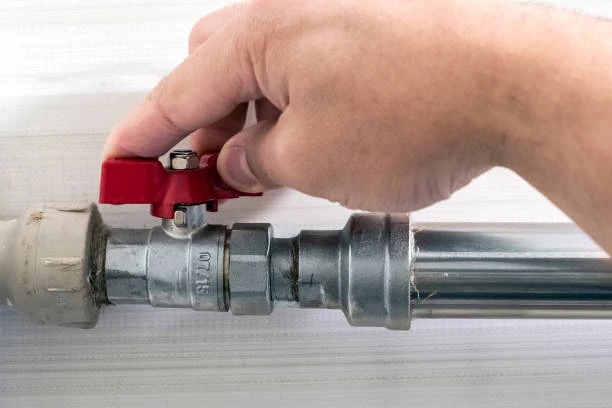
1. Introduction to Shut Off Valve Mechanics
Shut Off Valves control the flow of liquids or gases within a system by opening or closing an internal mechanism. Their design reflects a careful balance of simplicity and durability. Engineers build these valves with components that handle constant stress, pressure variations, and repeated operation. Understanding the mechanical structure helps users select the right model for any application.
2. Key Components and Their Roles
A standard Shut Off Valve includes a body, a stem, a handle or actuator, an internal sealing element (such as a ball, gate, or disc), and seats or seals. The handle rotates or pushes the stem, which moves the sealing mechanism into the open or closed position. This action blocks or allows flow through the pipeline. Each part contributes to the valve’s strength, responsiveness, and sealing performance.
3. Internal Mechanisms: Types and Functions
Shut Off Valves operate using various mechanisms. Ball valves rotate a spherical closure to control flow. Gate valves lift a metal plate to open the passage. Globe valves push a plug downward into a seat. Each mechanism offers distinct advantages. Ball valves respond quickly and offer tight seals. Gate valves handle large flow volumes with minimal pressure drop. Globe valves provide fine control over flow rates.
4. Materials for Mechanical Strength
Manufacturers select materials that match the valve’s mechanical demands. Brass, stainless steel, and forged steel provide durability and pressure resistance. Plastic valves use reinforced polymers to handle chemical exposure without corroding. Inside the valve, engineers use Teflon, rubber, or metal for the seats to ensure long-lasting sealing. These choices affect friction levels, movement smoothness, and overall wear resistance.
5. Data Focus: Performance Metrics
A technical study published in 2023 by the Mechanical Systems Institute evaluated the durability of 150 Shut Off Valves from various manufacturers. The results showed that stainless steel ball valves withstood up to 50,000 on-off cycles under 30 bar of pressure without significant torque loss. Plastic valves made from CPVC showed a tolerance of up to 25 bar and completed 20,000 cycles. Gate valves, though slower to operate, displayed excellent performance in high-flow systems with over 80,000 liters per minute passing through without internal damage.
6. Actuation Systems and Motion Control
Manual Shut Off Valves use levers or handwheels, while automated versions use electric, pneumatic, or hydraulic actuators. These actuators turn or push the stem precisely, depending on system feedback or control signals. Engineers design the stem and housing to resist torque and minimize backlash. In high-cycle environments, actuators improve speed and reduce the risk of human error.
7. Friction Management and Seal Efficiency
Friction between moving parts influences mechanical performance. Engineers minimize friction by using smooth finishes, lubricants, and low-friction materials like PTFE. Proper alignment of components ensures consistent movement and reduces wear. High-quality seals prevent internal leaks, reduce the effort needed to operate the valve, and maintain pressure levels in the system.
8. Conclusion: Mechanical Precision for Flow Control
The mechanics of Shut Off Valves reflect a deep understanding of material science, motion, and pressure dynamics. Every part—from the handle to the sealing surfaces—must function with precision. Engineers continue to refine valve designs to increase efficiency, extend service life, and reduce mechanical failures. By focusing on structure, movement, and endurance, modern Shut Off Valves ensure safe and reliable control in countless industries.
IFAN PEX fittings meet ISO 15875, GB/T 18992, DIN 16892, ASTM F877/F2788, BS 7291, BS EN ISO 15875 and CSA B137 standards for optimum quality and compatibility.
Contact
IFAN is a professional manufacturer with 30 years of experience, dedicated to producing high-quality plastic pipes, fittings, and valves. Our products include brass valves, PPR valves, as well as various pipes and fittings to meet different customer needs. Whether you need plumbing and drainage pipes or valve products. IFAN can provide a diverse range of high-quality, cost-effective products to support your projects. Below is our contact information.
We will reply your email or fax within 24 hours.
You can call us at any time if there is any question on our production.
Pls Mailto:[email protected]









Recent Comments