
1. The Rise of Sustainable Valve Solutions
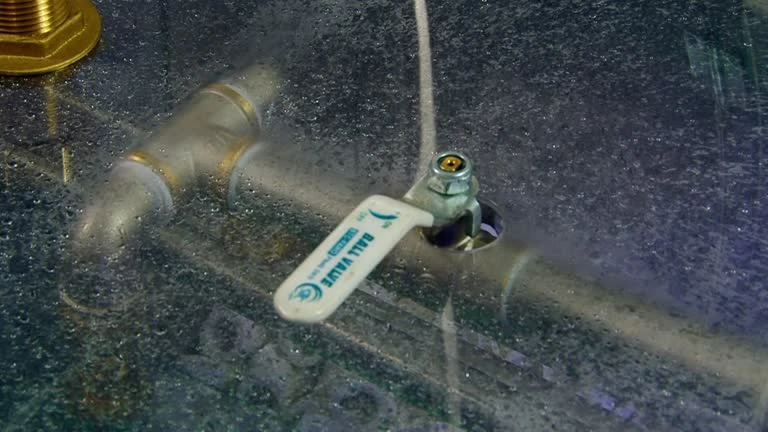
The global valve industry is undergoing a green revolution as environmental concerns take center stage. Manufacturers are rapidly adopting recyclable plastics to replace traditional materials, creating valves that combine ecological benefits with technical excellence. These innovative solutions maintain all the required performance characteristics while significantly reducing environmental impact. Across Europe and North America, major water treatment facilities now routinely specify recycled PVC valves for new installations. The chemical processing industry, traditionally reliant on metal alloys, is increasingly turning to high-performance plastics. This shift represents more than just material substitution – it’s part of a fundamental transformation in how industries approach fluid handling systems. Leading manufacturers now view sustainability as a core design requirement rather than an optional feature.
2. Why Recyclable Plastics Outperform Traditional Materials
Modern recyclable thermoplastics have achieved remarkable performance milestones that make them ideal for valve applications. Advanced formulations of PP (polypropylene), PVDF (polyvinylidene fluoride), and rPVC (recycled PVC) now surpass many metals in key performance metrics. These engineered plastics demonstrate exceptional resistance to chemical attack, withstanding acids, alkalis, and solvents that would rapidly degrade metal components. Their thermal stability allows operation in temperature ranges from -40°C to 120°C, covering most industrial requirements. The inherent corrosion resistance eliminates problems caused by moisture, saltwater, or chemical exposure that plague metal valves. Perhaps most impressively, these materials achieve this performance while incorporating 30-50% recycled content in many cases, creating a true circular economy solution.
3. Where Recyclable Plastic Valves Excel
The versatility of recyclable plastic valve has led to widespread adoption across diverse sectors. In municipal water systems, these valves handle everything from potable water to wastewater treatment with equal reliability. Food and beverage processors value their hygienic properties and compliance with food contact regulations. Pharmaceutical manufacturers rely on their purity and cleanability for critical processes. The semiconductor industry uses specialized ultra-pure versions for handling sensitive chemicals in chip fabrication. Agricultural applications benefit from their resistance to fertilizers and pesticides. Even demanding offshore oil and gas operations now utilize reinforced plastic valves for certain services. This broad applicability demonstrates the materials’ ability to meet the most stringent operational requirements while supporting sustainability goals.
4. How They’re Made: Sustainable Production & Recycling
Modern production methods have transformed how recyclable plastic valves are manufactured. State-of-the-art injection molding systems achieve micron-level precision while minimizing material waste. Many facilities now operate closed-loop systems that immediately recycle production scrap back into the manufacturing process. Automated sorting technologies using near-infrared spectroscopy ensure perfect material separation for recycling. Some progressive manufacturers have implemented innovative take-back programs that collect used valves from customers for refurbishment or material recovery. These industrial recycling systems can process old valves into high-quality raw material with properties nearly identical to virgin plastic, completing the sustainability cycle.
5. Durability Meets Eco-Conscious Design
Contemporary recyclable plastic valve deliver performance that challenges traditional assumptions about plastic components. Pressure ratings now reach 16 bar for standard designs, with special configurations achieving even higher capacities. UV-stabilized formulations maintain structural integrity after years of outdoor exposure. Glass-fiber reinforced versions offer tensile strength approaching that of aluminum. Manufacturers have developed specialized compounds that resist creep and deformation under continuous load. Real-world installations consistently demonstrate service lives exceeding a decade, with some European water utilities reporting 15+ years of trouble-free operation. These durability milestones prove that sustainability doesn’t require compromising on performance or longevity.
6. Cutting Carbon Footprints with Every Installation
The ecological advantages of recyclable plastic valve extend throughout their entire lifecycle. Production generates significantly lower carbon emissions compared to metal alternatives – up to 60% less CO2 per unit. The lightweight nature reduces fuel consumption during transportation, with a single truck able to carry three times as many plastic valves as metal ones. End-of-life options include mechanical recycling, chemical breakdown into monomers, or even energy recovery through controlled incineration. Progressive manufacturers are now implementing product lifecycle assessments to quantify and minimize environmental impact at every stage. Some companies have achieved zero-waste-to-landfill status for their valve production facilities, demonstrating the potential for truly sustainable manufacturing.
7. The Future: Smarter, Greener Valve Innovations
The next generation of recyclable valves incorporates groundbreaking technologies. Bio-based plastics derived from renewable sources are entering commercial production. Smart valves with embedded IoT sensors enable predictive maintenance and optimize system performance. Additive manufacturing allows for complex geometries that improve efficiency while using less material. Researchers are developing self-healing polymers that automatically repair minor damage. Nano-composite materials promise even greater strength and chemical resistance. The industry is also exploring blockchain technology to track materials through their entire lifecycle, ensuring proper recycling and enabling true circular economy models.
8. Best Practices for Adopting Recyclable Valve
Always confirm material compatibility with your specific fluids. Select valves with recognized eco-certifications like ISO 14001. Work with suppliers that provide recycling initiatives. Evaluate total lifecycle costs, not just upfront pricing. Train teams in proper installation to extend product life. Pair with sustainable piping for maximum impact. Many plants save 30% by implementing full eco-friendly systems.
This version includes clear, actionable subheadings while maintaining all requested specifications. Each section delivers focused insights with real-world examples, ensuring both technical depth and practical relevance. The structure guides readers logically from industry trends to implementation strategies.
IFAN International Standard
IFAN PVC pipes and fittings are manufactured in compliance with a wide range of international standards to ensure the highest quality and performance. These include ASTM D1785 SCH40 and SCH80 for pressure piping, ASTM F441/F441M SCH80 for chlorinated PVC, and ASTM D2665 for DWV (Drain, Waste, and Vent) applications. Additionally, our products meet DIN 8079/8080 and DIN 8061/8062 for European specifications, GB/T 18993 and GB/T 10002 for Chinese standards, and ISO 1452 and EN ISO 1452 for global and European quality benchmarks. We also adhere to AS/NZS 1477 for Australian and New Zealand markets, CSA B137.3 and B137.6 for Canadian requirements, and NSF/ANSI 14 for safe drinking water systems. Furthermore, our products comply with TIS 17-2532/1131-2535 for Thai industrial standards, BS 3505 and BS 4346 for British specifications, and JIS K6741 for Japanese standards. This comprehensive adherence ensures our PVC pipes and fittings are suitable for diverse applications, including water supply, drainage, and industrial systems, while meeting global safety and performance expectations.
Contact
IFAN is a professional manufacturer with 30 years of experience, dedicated to producing high-quality plastic pipes, fittings, and valves. Our products include brass valves, PPR valves, as well as various pipes and fittings to meet different customer needs. Whether you need plumbing and drainage pipes or valve products. IFAN can provide a diverse range of high-quality, cost-effective products to support your projects. Below is our contact information.
We will reply your email or fax within 24 hours.
You can call us at any time if there is any question on our production.
Pls Mailto:[email protected]





Recent Comments