
1. Navigating a Complex Market Landscape
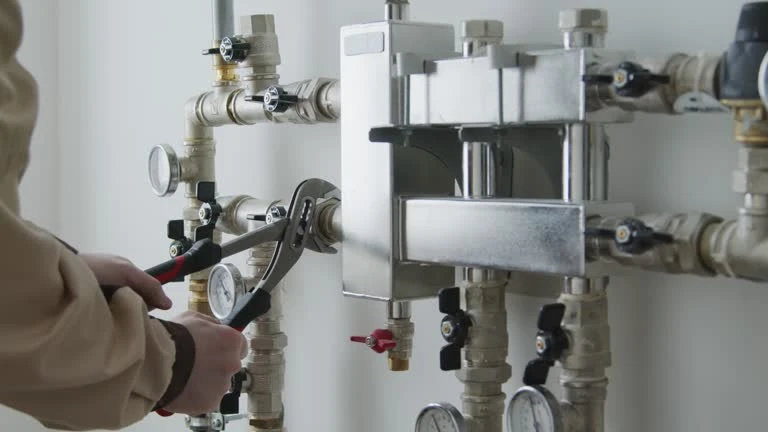
Manufacturers of Lockable Ball Valves face a competitive and rapidly evolving market. As industries demand smarter, safer, and more durable components, valve producers must innovate without compromising affordability or quality. The challenge lies in balancing performance enhancements with economic viability. Companies invest heavily in R&D to stay ahead, but rising production costs and global supply chain instability complicate these efforts.
2. Meeting Diverse Application Requirements
Industries such as oil and gas, water treatment, agriculture, and HVAC demand different features from Lockable Ball Valves. No universal design fits all scenarios. Engineers must develop tailored solutions for varying pressure ratings, chemical exposures, and temperature conditions. This customization increases design complexity and production timelines. Without careful planning, manufacturers risk offering products that fail to meet strict industry-specific standards.
3. Ensuring Tamper-Resistance in High-Risk Zones
Users install Lockable Ball Valves to prevent unauthorized access, but ensuring tamper-proof reliability remains a technical challenge. Vandals, untrained personnel, or even curious bystanders may attempt to manipulate valves in public or unsecured locations. Designers must create locking systems that resist both physical force and environmental degradation. Simple padlocks often fail under extreme conditions, pushing developers to adopt more robust, often costlier, alternatives.
4. NEWS: Lock Failure Prompts Utility Review in Denver
In February, a utility company in Denver reported a lock failure on one of its Lockable Ball Valves installed at a public park water station. According to operations manager Lucas Hayes, “Someone bypassed the mechanical lock and caused flooding that damaged nearby infrastructure.” The company immediately launched an investigation and began replacing affected units with upgraded models featuring digital locks. This incident reignited conversations around the reliability of low-cost locking mechanisms and emphasized the need for innovation in tamper protection.
5. Integrating Smart Technologies without Overcomplicating
The shift toward smart infrastructure encourages integration of sensors, wireless modules, and data tracking into Lockable Ball Valves. However, complexity often becomes a challenge. Users sometimes struggle with software compatibility, network connectivity, and technical maintenance. Engineers must simplify integration while maintaining functionality. Too many features can overwhelm operators or increase the risk of system failure. The goal remains to make smart valves powerful yet user-friendly.
6. Adapting to Regulatory Pressures Worldwide
Regulatory frameworks evolve quickly and vary across regions. Valve manufacturers must comply with safety, environmental, and performance standards that differ from one market to another. Certification processes demand time, technical documentation, and in-field testing. Companies that fail to adapt to regulatory changes risk losing access to critical markets. For global players, managing this regulatory patchwork presents a major challenge in product development and distribution.
7. Balancing Cost and Innovation
Innovative Lockable Ball Valves with advanced features such as remote access, corrosion-resistant materials, and real-time monitoring appeal to customers—but these features often raise prices. Not all clients can afford premium models. Manufacturers must find ways to reduce costs without sacrificing quality or security. Achieving this balance requires efficient manufacturing processes, scalable designs, and modular features that users can upgrade over time.
8. Future Challenges Demand Collaborative Solutions
As demand grows for smarter, more secure Lockable Ball Valves, manufacturers, suppliers, and end-users must collaborate to address industry challenges. Joint efforts can accelerate innovation, share compliance costs, and improve user education. No single actor can solve these issues alone. Through cross-sector partnerships, the fluid control industry can overcome today’s obstacles and shape a future where safety, innovation, and practicality work hand in hand.
IFAN PEX fittings meet ISO 15875, GB/T 18992, DIN 16892, ASTM F877/F2788, BS 7291, BS EN ISO 15875 and CSA B137 standards for optimum quality and compatibility.
Contact
IFAN is a professional manufacturer with 30 years of experience, dedicated to producing high-quality plastic pipes, fittings, and valves. Our products include brass valves, PPR valves, as well as various pipes and fittings to meet different customer needs. Whether you need plumbing and drainage pipes or valve products. IFAN can provide a diverse range of high-quality, cost-effective products to support your projects. Below is our contact information.
We will reply your email or fax within 24 hours.
You can call us at any time if there is any question on our production.
Pls Mailto:[email protected]








Recent Comments