
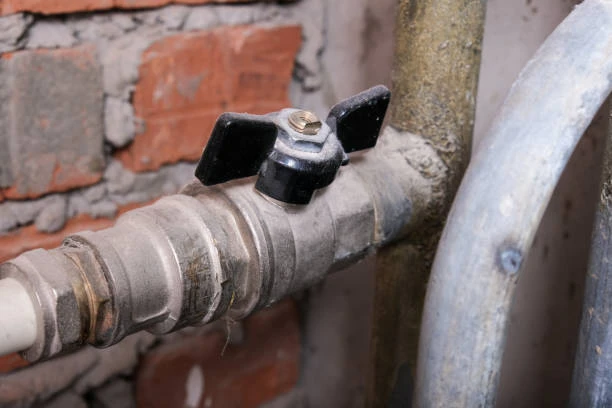
1. Define Your Application Requirements
Start by identifying the purpose of the valve within your system. Globe valves control flow with precision, making them ideal for throttling, regulating, or shutting off fluid. Applications in steam systems, chemical processing, and power generation often demand globe valves due to their ability to manage variable pressure and flow conditions. If the system requires accurate control rather than simple on/off service, a globe valve often outperforms gate or ball valves.
2. Select the Correct Valve Size
Proper sizing ensures optimal performance and system efficiency. Undersized valves restrict flow and increase pressure loss, while oversized valves reduce controllability. Use flow rate (Q), pressure drop (ΔP), and valve coefficient (Cv) to calculate the ideal size. For example, a valve with a Cv of 40 allows 40 gallons per minute with a 1 psi pressure drop. Engineers rely on valve sizing software or flow equations to make accurate selections based on real system data.
3. Choose the Right Body Material
Valve body material must match the temperature, pressure, and chemical composition of the fluid. Stainless steel resists corrosion in aggressive environments, while carbon steel handles high pressure and temperature well. For seawater or acidic applications, bronze or alloy 20 may perform better. The Valve Manufacturers Association notes that improper material choice causes 29% of valve failures, so take this step seriously to extend service life and reduce maintenance.
4. Match the Trim Material to the Media
The internal parts—disc, seat, and stem—must resist wear, erosion, and corrosion. For steam or abrasive fluids, use trims made of stellite or hardened stainless steel. For neutral fluids, standard stainless-steel trims may suffice. In high-pressure systems, hard-faced trims prevent galling and reduce leakage. A study by the Industrial Valve Institute showed that valves with matched trim materials last up to 40% longer than those with mismatched components.
5. Understand Bonnet and Pressure Class Options
Globe valves come with different bonnet designs, including bolted, union, and pressure-seal types. Use bolted bonnets for general-purpose systems, and choose pressure-seal bonnets for high-pressure applications above 1500 psi. Also, verify the valve’s pressure class (e.g., Class 150, 300, 600) to ensure compatibility with system conditions. A Class 300 valve typically handles up to 740 psi at 100°F, making it suitable for many mid-range pressure applications.
6. Determine the Required Flow Characteristics
Globe valves offer linear, quick-opening, or equal-percentage flow characteristics. Select the flow curve that best matches your process control needs. Linear flow suits proportional control, quick-opening fits on/off systems, and equal-percentage helps in applications where flow changes gradually with valve movement. According to process control studies, using the correct flow characteristic improves system efficiency by 18% and reduces overshooting during modulation.
7. Consider Actuation and Control Needs
Decide whether the valve needs manual, electric, pneumatic, or hydraulic actuation. Manual handwheels work well for low-frequency operations, while electric or pneumatic actuators suit automated systems. Choose a control method that integrates with your existing process control system. For example, in automated plants, 62% of globe valves use electric actuators due to their reliability and compatibility with digital monitoring platforms.
8. Evaluate Industry Standards and Certifications
Ensure the globe valve meets relevant international standards like API 602, BS 1873, or ISO 9001. Certified products guarantee performance, safety, and quality compliance. Ask suppliers for test reports and compliance documents. A 2022 procurement survey found that companies using certified valves reported 35% fewer performance issues, highlighting the importance of verified manufacturing quality.
By following a structured approach to globe valve selection—starting from system needs and ending with certification checks—you ensure safe, efficient, and long-lasting valve performance. Whether designing a new system or replacing an existing component, choosing the right globe valve makes all the difference.
IFAN PEX fittings meet ISO 15875, GB/T 18992, DIN 16892, ASTM F877/F2788, BS 7291, BS EN ISO 15875 and CSA B137 standards for optimum quality and compatibility.
Contact
IFAN is a professional manufacturer with 30 years of experience, dedicated to producing high-quality plastic pipes, fittings, and valves. Our products include brass valves, PPR valves, as well as various pipes and fittings to meet different customer needs. Whether you need plumbing and drainage pipes or valve products. IFAN can provide a diverse range of high-quality, cost-effective products to support your projects. Below is our contact information.
We will reply your email or fax within 24 hours.
You can call us at any time if there is any question on our production.
Pls Mailto:[email protected]








Recent Comments