
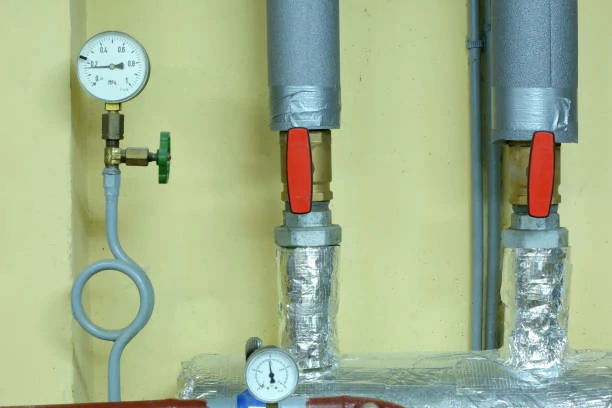
Introduction to Heavy-Duty Flow Divider Valves
Heavy-duty flow divider valves play a critical role in high-pressure hydraulic systems. These valves ensure precise fluid distribution across multiple circuits. Industries like construction, mining, and aerospace rely on them for efficient operations. Their robust design withstands extreme pressures and harsh environments. For example, in hydraulic excavators, flow dividers enable simultaneous control of multiple functions. This capability enhances productivity and reduces downtime. Engineers prioritize these valves for their reliability and performance under demanding conditions.
Key Features and Design Considerations
Heavy-duty flow divider valves feature durable materials like hardened steel or stainless steel. These materials resist wear and corrosion in high-pressure environments. Precision machining ensures accurate flow splitting, even under varying loads. Engineers incorporate pressure-compensating mechanisms to maintain consistent performance. For instance, in forestry equipment, flow dividers manage hydraulic flow to both the boom and grapple. This ensures smooth operation without overloading the system. Designers also focus on compact sizes to fit space-constrained applications.
Applications in High-Pressure Systems
High-pressure applications demand reliable flow control, making these valves indispensable. In oil and gas drilling, they manage hydraulic power to multiple tools simultaneously. Mobile hydraulic systems, such as cranes and loaders, use them for synchronized movements. For example, a crane’s boom and winch require precise flow division for safe operation. Aerospace systems utilize these valves for landing gear and flap control. Their ability to handle high pressures ensures safety and efficiency in critical operations.
Advantages Over Standard Flow Divider Valves
Heavy-duty flow divider valves outperform standard models in several ways. They handle higher pressure ratings, often exceeding 5000 psi. Their enhanced durability reduces maintenance needs and extends service life. Advanced designs minimize pressure drops, improving system efficiency. For example, in agricultural machinery, these valves ensure consistent hydraulic flow to both steering and lifting mechanisms. This prevents operational delays and enhances productivity. Their reliability in extreme conditions makes them a preferred choice for heavy industries.
Installation and Maintenance Best Practices
Proper installation ensures optimal performance of heavy-duty flow divider valves. Technicians must follow manufacturer guidelines for alignment and sealing. Regular inspections detect wear or leaks early, preventing system failures. Lubrication of moving parts reduces friction and prolongs valve life. For instance, in marine applications, routine maintenance prevents saltwater corrosion. Using compatible fluids and filters maintains valve efficiency. Training operators on proper usage minimizes the risk of damage.
Future Trends and Innovations
The future of heavy-duty flow divider valves lies in smart technology integration. Sensors and IoT connectivity enable real-time monitoring of valve performance. Advanced materials, like carbon composites, promise lighter yet stronger designs. Energy-efficient designs reduce hydraulic system power consumption. For example, in renewable energy systems, these valves optimize hydraulic power distribution. Innovations in manufacturing, such as 3D printing, allow for custom valve designs. These advancements ensure continued relevance in evolving industrial applications.
Environmental and Safety Considerations
Heavy-duty flow divider valves must meet stringent environmental and safety standards. Manufacturers design them to prevent fluid leaks, which can harm ecosystems. In industries like marine and offshore, valves must resist saltwater corrosion to avoid environmental contamination. Safety features like pressure relief mechanisms protect systems from overloading. For example, in firefighting equipment, these valves ensure consistent water flow to multiple hoses. Compliance with international standards, such as ISO and API, guarantees reliability. Proper disposal and recycling of worn-out valves further reduce environmental impact. These considerations make them a sustainable choice for high-pressure applications.
IFAN International Standard
IFAN PVC pipes and fittings are manufactured in compliance with a wide range of international standards to ensure the highest quality and performance. These include ASTM D1785 SCH40 and SCH80 for pressure piping, ASTM F441/F441M SCH80 for chlorinated PVC, and ASTM D2665 for DWV (Drain, Waste, and Vent) applications. Additionally, our products meet DIN 8079/8080 and DIN 8061/8062 for European specifications, GB/T 18993 and GB/T 10002 for Chinese standards, and ISO 1452 and EN ISO 1452 for global and European quality benchmarks. We also adhere to AS/NZS 1477 for Australian and New Zealand markets, CSA B137.3 and B137.6 for Canadian requirements, and NSF/ANSI 14 for safe drinking water systems. Furthermore, our products comply with TIS 17-2532/1131-2535 for Thai industrial standards, BS 3505 and BS 4346 for British specifications, and JIS K6741 for Japanese standards. This comprehensive adherence ensures our PVC pipes and fittings are suitable for diverse applications, including water supply, drainage, and industrial systems, while meeting global safety and performance expectations.
Contact
IFAN is a professional manufacturer with 30 years of experience, dedicated to producing high-quality plastic pipes, fittings, and valves. Our products include brass valves, PPR valves, as well as various pipes and fittings to meet different customer needs. Whether you need plumbing and drainage pipes or valve products. IFAN can provide a diverse range of high-quality, cost-effective products to support your projects. Below is our contact information.
We will reply your email or fax within 24 hours.
You can call us at any time if there is any question on our production.
Pls Mailto:[email protected]










Recent Comments