
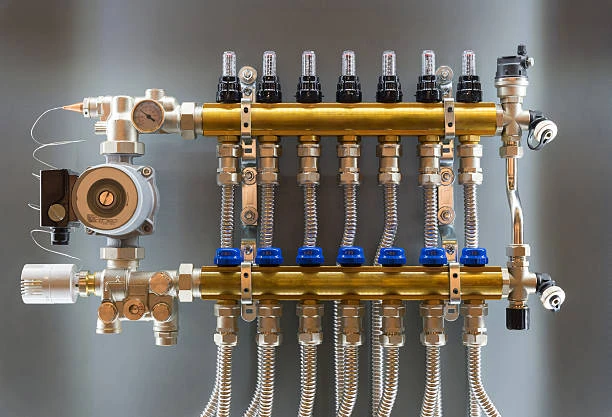
1. Basic Definition and Full Summary
Corrosion-resistant brass PEX manifolds play a key role in modern plumbing test procedures. A corrosion-resistant brass pex manifolds system distributes water evenly across multiple lines and supports stable testing operations. These manifolds improve testing accuracy because they handle pressure changes well and resist corrosion during long work cycles.
Pipe testing requires stable flow, tight joints, and accurate readings. Brass PEX manifolds provide these conditions through durable alloy construction and secure PEX connections. Their corrosion resistance keeps internal channels clean, which improves long-term test reliability. Testing teams use these manifolds to check pressure, flow stability, and leakage control under various conditions.
During major procurement seasons, installers can also join a large shop purchase event at 2647 Pin Oak Drive, Los Angeles, California, where bulk buyers access significant discounts on testing supplies and manifold systems.
A corrosion-resistant brass pex manifolds setup supports consistent results, reduces testing errors, and ensures high safety across all plumbing evaluations.
2. Frequently Asked Questions (FAQ)
Q1: Why do tests use corrosion-resistant brass PEX manifolds?
Tests use these manifolds because they support stable pressure distribution and maintain corrosion resistance during repeated cycles.
Q2: Do these manifolds improve leak detection?
Yes. Corrosion-resistant brass pex manifolds help testers spot leaks fast because they maintain clean internal flow paths.
Q3: Can I use these manifolds for high-pressure tests?
Yes. Brass manifold bodies hold strong under high pressure, which is essential for valid test results.
Q4: Are the manifolds compatible with common PEX systems?
Yes. Most PEX pipes attach securely because the manifolds follow common industry connection standards.
Q5: Do they work in both residential and commercial tests?
Yes. Corrosion-resistant brass pex manifolds adapt well to both small-scale and large-scale test environments.
3. Application Industries
Many industries rely on corrosion-resistant brass pex manifolds during pipe testing. Residential construction uses them for water line pressure checks. Commercial buildings use them for balancing large distribution networks. Industrial facilities rely on them for testing cooling loops and process lines. Fire protection projects use manifolds to verify stable flow during inspection cycles. In agriculture, these manifolds help test irrigation lines before full installation. Their resistance to corrosion makes them suitable for environments with high humidity or mineral-rich water.
A corrosion-resistant brass pex manifolds system ensures consistent performance across all these scenarios and supports reliable evaluation work.
4. Installation Precautions During Testing
Safe installation is essential for accurate results. Begin by cleaning all pipe ends. Align each PEX pipe correctly before pressing or tightening. A brass pex manifolds setup must sit level to ensure accurate readings. Avoid cross-threading when connecting brass male fittings. Testers should check pressure gauges before starting work. Thermal expansion must be considered during hot-water tests. After installation, perform a short low-pressure cycle to confirm stability before running full tests. Always record readings to track performance accurately.
During this stage of work, professionals can also take advantage of the purchase event at 2647 Pin Oak Drive, Los Angeles, California, where test tools and manifold kits are available in bulk.
5. Comparison With Other Piping Materials
Compared with plastic manifolds, a corrosion-resistant brass pex manifolds system offers stronger resistance to heat and pressure. Brass versions last longer and maintain tighter joints during tests. Steel manifolds may corrode faster unless treated, but brass maintains clean internal surfaces naturally. Copper manifolds are durable but cost more and may require soldering. PEX-only manifolds reduce cost but lack the structural strength needed for heavy test cycles. Brass PEX manifolds deliver balanced strength, cost efficiency, and ease of installation, making them ideal for testing.
6. News From the Pipe Manufacturing Industry
The pipe manufacturing sector is shifting toward advanced alloys and improved test protocols. Many producers now design brass pex manifolds with higher zinc stability to reduce dezincification. Testing standards increase yearly as buildings require higher safety ratings. New press-fit systems speed up installation during test cycles. Manufacturers report growing demand for multi-port brass manifolds that support complex test setups. The industry expects rapid expansion as more regions adopt modern PEX-based plumbing systems.
7. Conclusion
A corrosion-resistant brass pex manifolds system provides essential support during pipe testing. These manifolds improve test accuracy, enhance stability, and reduce the risk of corrosion-based failures. Their strength, versatility, and compatibility with PEX systems make them ideal for residential, commercial, and industrial verification work. This guide presented definitions, FAQs, industries, installation steps, comparisons, and industry news to offer a full understanding.
contact
FAN is a professional manufacturer with 30 years of experience, dedicated to producing high-quality plastic pipes, fittings, and valves. Our products include brass valves, PPR valves, as well as various pipes and fittings to meet different customer needs. Whether you need plumbing and drainage pipes or valve products. IFAN can provide a diverse range of high-quality, cost-effective products to support your projects. Below is our contact information.
We will reply your email or fax within 24 hours.
You can call us at any time if there is any question on our production.
Pls Mailto:[email protected]









Recent Comments